Category: !CAI

  • The Hydration Situation: Healthy Water Habits

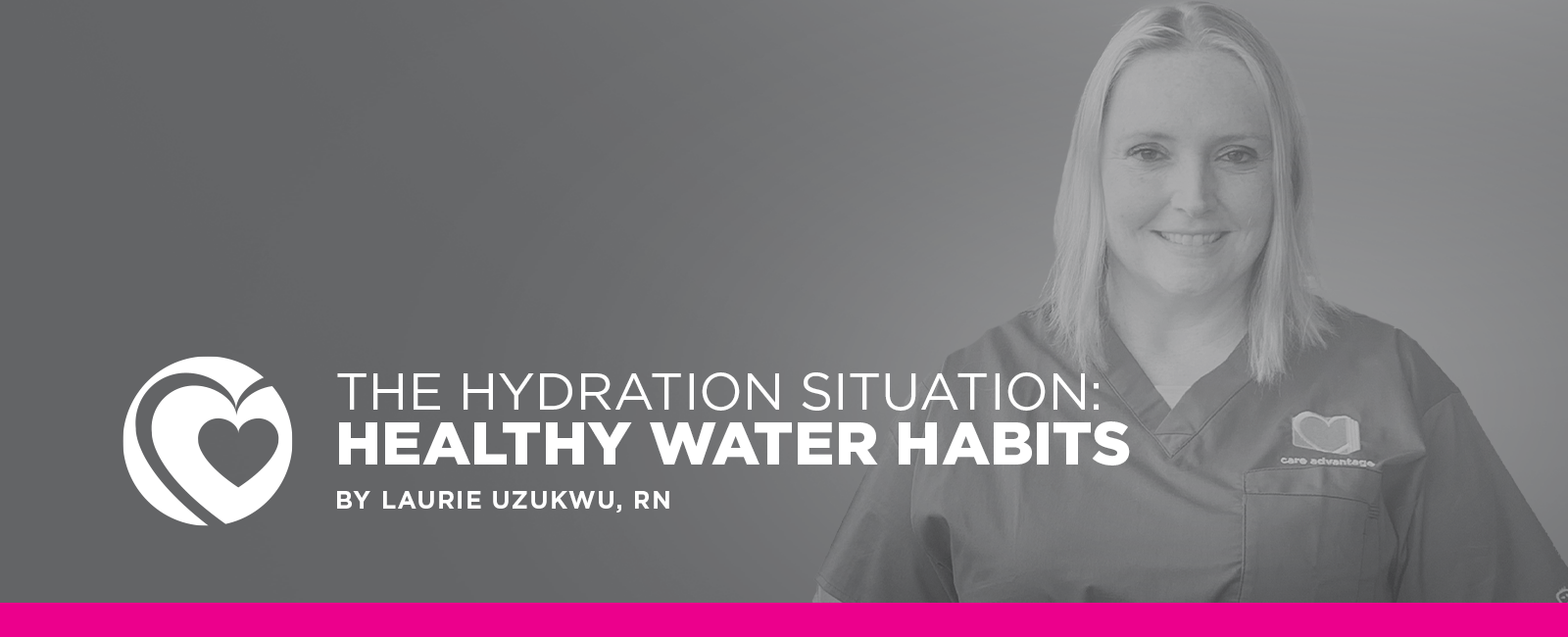
    The Hydration Situation: Healthy Water Habits

    Staying hydrated is important for everyone, but as we get older it is even more important to make sure we are getting enough fluids. Certain diagnoses, such as dementia or heart failure, can provide various challenges to proper hydration. Here are some ways to combat dehydration:

    • Keep a glass of water (or another non-sugary drink)
    nearby all the time and make sure you’re sipping on it regularly.
    • Know your numbers! Everyone has different needs for fluid intake based upon their age, gender, activity level, and chronic illnesses. For example, a healthy elderly person needs about 1.5-2 liters of fluid every day, while someone with severe heart failure may have a much lower number. Be sure to consult with your physician to make sure your fluid intake goals are accurate!
    •
    Remember that many foods have fluid too, especially soups and certain fruits, like grapes and melons.
    • Be careful when you’re outside in hot weather! It is easy to sweat away fluid quickly, so make sure you bring along some extra water!• Get a fun water bottle with measurement markings. You can fill it with your water needs for the day and then watch as you get closer to meeting your goal as the day goes on!

    Dementia, Alzheimer’s, and other disorders can make hydration especially important. They sometimes forget to drink, or do not have a strong sensation of thirst. Here are some ways you can help those you care about that just aren’t drinking enough:

    • Find other drinks they like. If they’re not drinking water, maybe iced tea or seltzer would be more enticing? Maybe they prefer their favorite cup or a straw. Catering to small preferences can lead to big gains!
    • Remind them to drink regularly. Give them a small glass (1/2 cup or less) to finish then leave them with more to sip on.
    • Incorporate foods high in fluid that your loved one enjoys into their diet. Just be mindful of sodium and sugar contents!
    • Try Jelly Drops, a hydrating treat that is brightly colored, sweet, and low in sugar.
    • Drink with them! Get a glass for yourself, a glass for your loved one, and join them.
    • Encourage nutritional drinks, such as Ensure, especially when your loved one is struggling to eat enough as well.

     Always look out for signs of dehydration in yourself and in the elderly

    • Fatigue, or feeling tired or sluggish
    • Increased heart rate
    • Low blood pressure
    • Feeling dizzy or light-headed
    • Dark-colored urine
    • Dry mouth

    Dehydration can turn into a medical emergency, especially in the elderly. Dehydration can trigger atrial fibrillation, a cardiac rhythm abnormality that can lead to stroke. It can cause electrolyte abnormalities that can lead to many complications, including seizures. It can also cause dangerously low blood pressure and many other complications. 

    Combating dehydration in the elderly can seem like a chore, but with the right tools, a fun attitude, and a team approach, it’s easier than you may think!

    ABOUT THE AUTHOR:
    Laurie Uzukwu, RN is a Home Health Supervisor for Care Advantage, Inc – Mechanicsville location. When she isn’t caring for our elderly clients, you can find her on the road at one of her children’s soccer games or dance competitions. She lives in Virginia with her husband, who is also a nurse, children and dog named Brie.
  • CROSS MY HEART AND HOPE TO LIVE

    CROSS MY HEART AND HOPE TO LIVE

    February is American Heart Month, a month dedicated to improving and spreading information on cardiovascular health. Over 650,000 Americans die every year from heart disease, which is about one death every 50 seconds. Cardiovascular disease is the leading cause of death in America almost every year.

    Heart health is incredibly important for everyone, regardless of age, race, or gender. There are three risk factors that commonly lead to heart disease: high blood pressure, high blood cholesterol, and smoking. Taking responsibility for these three conditions can lower your chances for developing heart disease.

    Here are some easy ways to improve your heart health:

    1)     Exercise

    Take a short, 10-minute walk around the neighborhood or find other ways to safely get your heart pumping

    2)     Quit Smoking/Vaping

    Studies show that smoking can increase the amount of plaque in your blood stream, which can lead to clogging. This clogging can lead to Coronary Heart disease and the blockages can lead to heart attacks.

    3)     Lose Weight

    The heart is a muscle that is constantly pumping blood around your body. When a person is overweight, the heart must work overtime to pump the blood around, which leads to high blood pressure. Losing weight can lower your blood pressure and reduce your risk of heart disease.

    4)     Eat Heart-healthy Foods

    Start your day off with a healthy, balanced breakfast including whole grains and some fruit. Add vegetables into your diet to get some healthy fats. Another way to get healthy fats is by trading red meat for fish at least once a week.

    5)     Chocolate

    Thankfully, a healthy amount of chocolate has been shown to increase good cholesterol and lower bad cholesterol.

    6)     Don’t Overeat

    Cut out soda and eat less sodium

    7)     Don’t Stress

    When you stress you elevate your heart rate, which can lead to high blood pressure. Take a moment, relax, and breathe.

    8)     Visit Your Doctor to Get Your Levels Checked

    Checking cholesterol is difficult to do by yourself, going to your doctor and getting a blood test is the easiest way to do it. While you’re there, make sure that you get your blood pressure checked too. Ask your doctor for advice that fits your lifestyle and how you can improve your heart health. 

    Some of these can be challenging for seniors to accomplish on their own, which is why having a caregiver assist seniors through these steps can be very beneficial.

    Caregivers can walk and encourage exercise with seniors. Meal preparation is a helpful task that caregivers can assist with and add healthy foods into seniors’ diets to promote heart health. Stress is sometimes unavoidable, but caregivers can alleviate some stress on the senior and their loved ones by providing incredible care and being present with the senior. Caregivers are able to drive seniors to their doctors’ appointments to get their heart checked out.

    Together, by taking our heart health into careful care, we can reduce our risks for developing heart disease.

  • Top Ten Cold Weather Tips for Seniors

    Top Ten Cold Weather Tips for Seniors

    Not many people go around saying “Happy Winter.” It’s cold and most of us don’t like it, but winter is Mother Nature’s way of hitting the reset button on life. So, we tolerate the blustery bite that Old Man Winter brings each year. However, as we age, it gets harder for our bodies to tolerate such extreme weather conditions. Here are our top 10 tips for cold weather preparation for seniors.

    1. Stock emergency resources in their homes. Emergency kits must be easily accessible and should include water, flashlight, batteries, radio, and blankets. Seniors should have at least a seven-day supply of prescription medications and a three-day supply of food and water on hand. Although I do encourage you to have a stocked cabinet.

    2. Watch your temperature.  Seniors body temperatures tend to run lowered than most adults. Especially if they have cardiac issues, hypothyroidism as well as on blood thinners. Hot drinks are a very good idea for anyone whom is cold as it will help hydrate them as well. Thermostats should be set to 68 degrees to prevent hypothermia and prevent pipes from freezing.

    3. Dress smart for cold weather. Make sure their clothing is season appropriate – long sleeves, long pants, thermal socks. Layered loose-fitting clothing; gloves or mittens. Wearing a hat protects against heat loss, as close to half of body heat is lost through the head. Ensure they have a winter jacket, scarf and correct shoes.

    4. Keep an eye on nutrition. With the heat being on- everyone tends to stay a bit dry. Encourage constant liquids- keep a cup of water or ice with them at all times. A diet full of fruits and vegetables help with the needed vitamins to help combat winter colds. If unable to eat a balanced diet- talk to your doctor about supplemental vitamins such as Vitamin D, Vitamin C, Zinc.  Keep extra food on hand in the freezer as well as bottled or canned fruit juices and non-fat milk powder. Meals on Wheels is a great resource for Seniors needing a hot meal a day- Local DSS can assist with getting this set up.

    5. Identify fall risks. Often everyone will take off their wet boots when they get home and walk around the house in socks, which often leads to slippery surfaces and falls.  Encourage them to wear slippers or grippy socks (Thermal socks are wonderful for grip as well as warmth) around the home. Keep driveways and walkways clear of snow- use ice melt or walk on grassy surfaces when possible.

    6. Eliminate potential fire risks. Space heaters are great for warmth in the winter. Make sure they are in the middle of the room, not being used as a table with items on top. As well as being plugged directly into an outlet versus a power strip. If using electric blankets- check the wiring is ok. Discourage a heat pad as it can cause burns to the skin. Check to make sure you have a fire extinguisher and a working smoke alarm as well. If not- your local fire department will bring out a smoke detector to your home and install for you.

    7. Encourage activity and try safe exercises at home. During the winter- Seniors can become sedentary and depressed with the weather. Encourage them to get up and walk around, rocking in a rocking chair is great for their bone health as well as their muscle strength. If you notice they have had a change- always reach out to your doctor and see about having some physical therapy to keep those muscles going. The YMCA has a program called Silver Sneakers- great for interaction and exercise.

    8. Have a plan for winter emergencies. If your power goes out, who is going to be able to come over and assist. Have your emergency readiness kit available as well as extra blankets. Keep a list of the local fire department, electric company, and family contacts.

    9. Get your Flu/Covid Vaccine. Everyone should get their flu shot yearly as long as they do not have an adverse reaction to it. Also encourage the COVID vaccine and booster as well. It’s also important that all family members who interact regularly with your senior loved one get the shot – this will help to keep your senior healthy, and it will benefit the health of your younger family members as well

    10. Boost Mental Health. Winter time can bring on the blues. Some people are affected by Seasonal Affective Disorder or Depression. Open the blinds in the home, Use light colored curtains to allow the natural light into your home. Happy Lights are a great way to get a boost of Vitamin D in the winter time. Stay involved with your social circle and regular activities.

    ABOUT THE AUTHOR:

    Emily Dix is a nurse who resides in South West Virginia with her family. When she is not helping patients live long healthy lives, she enjoys camping in Virginia State Parks and cheering on her son at his latest basketball game.

  • CARING FOR YOUR LOVED ONES THIS THANKSGIVING

    CARING FOR YOUR LOVED ONES THIS THANKSGIVING

    Thanksgiving is the wonderful time of year that we get to gather around with family and loved ones to eat a delicious meal and talk to family we haven’t seen for a while. This annual get-together is a staple in America, and now with vaccines and boosters being rolled out, we can safely enjoy a meal together again.

    This family reunion is a great time to check up on your senior loved ones, to see how they are doing in their own home or with others. Care Advantage can assist them in their own homes, looking after them, helping with activities of daily living, and being an ear to listen.

    COVID has been difficult for many seniors, especially those who are living alone. Here are some quick checks that you can do to make to ensure that your loved ones are safe.

    If you’re having Thanksgiving at a senior’s house, here are some signs to look out for:

    – Laundry piling up

    – Spoiled food in fridge

    – Tripping Hazards, such as:

                  – loose rugs

                  – items on the floor

                  – poorly lit areas

    Care Advantage is able to provide laundry and linen cleaning, meal preparation and clean up, and mobility assistance in their home.

    If your elderly loved ones are coming to your house, here are some other signs to look out for:

    – Difficulty performing familiar tasks, such as:

                  – eating

                  -dressing

                  -walking

    – Inability to complete sentences

    – Lack of motivation

    – Struggle to recall names of familiar people or objects

    – Extreme changes in mood

    – Loss of interest in hobbies

    These can be early signs or signals that they may need some extra help around the house. Take a moment to fix the immediate issues; light the dim areas, fasten loose rugs, toss the spoiled food, and then spend the rest of the day with them.

    Work on a puzzle with your senior, help them make a craft with the kids, play a game as a family, prepare a memorable dish together, flip through one of their photo albums. Be present, engage with them, and create wonderful holiday memories this year.

    Have a great, safe Thanksgiving and check in on your loved ones.

    Mac Bowman is a Senior at Virginia Commonwealth University majoring in Public Relations. He is a native of Powhatan County, Virginia and enjoys camping, activities with his church groups and relaxing with his family and friends.

    ‍

  • THE CARE ADVANTAGE FAMILY, A VIEW FROM A UNITED STATES AIRFORCE VETERAN

    THE CARE ADVANTAGE FAMILY, A VIEW FROM A UNITED STATES AIRFORCE VETERAN

    Joining the Care Advantage family of brands has been one of the most rewarding opportunities of my career. I have been able to join a work family and a culture that is truly a step above any place I have worked before. Care Advantage not only puts heart into every patient they care for but also every employee. They truly put care into every life they touch and every facet of their organization. The team culture is one success. Not only success for one individual, but success that is shared across the entire family. Every branch of our organization always pulls together to support those in need which is huge. As a veteran of the United States Airforce, the team comradery is near and dear to me. It is always refreshing to know that your work family will always have your back in your time of need.

    I began my journey in healthcare as a home health aide in high school, later attending LPN classes through my local technical school. I was unable to afford college after my high school graduation and chose to join the Air Force leaving two weeks after high school graduation. My eight years in the Air Force were spent as a Nuclear Weapons Specialist maintaining the United States nuclear weapons arsenal. After completing my tour, I was able to use my military benefits to finally obtain my Registered Nurses license. After many years, I returned and completed my Family Nurse Practitioner certification as well as my Doctorate in healthcare systems leadership.

    I was previously the COO with Interim Healthcare in Virginia oversighting skilled care. My current role as the Regional Director of Operations for the Care Advantage skilled home health family of brands entails daily oversight of all skilled division operations. I am involved in the skilled delivery of care from the time a prospective patient enters our care until the time they graduate from our services. We focus specifically in helping those in need of a higher level of healthcare services.  We strive to help our patients stay independent in their homes for as long as possible. Our nurses and therapists provide the highest level of care delivery for all those who choose our services. I have been blessed as a veteran to have been afforded many growth opportunities within healthcare over the years.

    My educational journey has been a long one, taking many years to complete. However, I have been given the chance to see every level of healthcare and appreciate everyone for all they do in their respective positions. Care Advantage also recognizes the efforts of every individual from the CEO to the companion in the home. Every person in our work family is invaluable in their own way. While patient care is always at the heart of the services we provide, Care Advantage also ensures that we, as employees and as veterans, know we are at the heart of what makes us successful as an organization.

    I could not be as successful as I have been without the support of both my family and my work family at Care Advantage. They understand the sacrifices I have made in my life as a veteran and the difficult scars that sometimes leaves behind. In summary, Care Advantage is a compassionate and genuine organization that truly cares for every individual connected to them. They have always had my best interests at heart, and I know that as a company, we will do all that we can to ensure we provide nothing but the best in home health services for your loved ones. As a veteran, I encourage anyone looking for a rewarding career in healthcare to come to Care Advantage. Their name really does say it all; its truly all about caring for those who depend on you!

    ‍

  • CELEBRATING THE CULTURE AND HISTORY OF AMERICANS WITH HISPANIC DECENT

    CELEBRATING THE CULTURE AND HISTORY OF AMERICANS WITH HISPANIC DECENT

    “SAY YOU’RE DOMINICAN WITHOUT SAYING YOU’RE DOMINCAN”, A STORY OF GROWING UP IN A HISPANIC HOME FROM MAGGIE VICTORIA, SCHEDULING AND RESOURCE SPECIALIST FOR CARE ADVANTAGE.

    National Hispanic Heritage Month runs from September 15th to October 15th, celebrating the culture and history of Americans with Hispanic descent.

    On the weekends when you’re cleaning your home, you have Bachataon blast, echoing through your hallways and you occasionally dance with your broom or mop. Your inside voice is really yoursitting-on-the-bleachers-in-Yankee-stadium-with-a-full-house voice, and your laugh is silent with tears streaming down your face and your stomach doing the jiggle.

    When it comes to mealtime the staple is rice, beans, stewed chicken, fried sweet plantains, and a green salad with avocado, served on your table and you may not be excused until you finish your plate, because according to your mom “There are children starving in the world so we cannot waste. “After lunch you take an afternoon nap and then continue your labor until the evening hours. Your mom teaches you how to clean and cook before you reach high school, and you must always look out for your younger brothers and sisters while your parents work. Everyone is either an aunt, uncle, or cousin who is allowed to tell on you when they catch you doing something you are not supposed to. All of us are taught to fear the dreaded “Cuco” or boogeyman who will steal you in the night when you misbehave.

    Most of all when it comes to family, we are taught to respect our elders, to always help each other out, and to never ever put our aging loved ones in facilities. Our family gatherings are filled with adults trading stories at the dinner table while they exchange dishes. All the women of the family prepare and take to “Mama’s”(grandma) house, while all the kids gather on the living room floor to play and eat. Mama’s house will have a ceramic statue of the “Divino Niño” (baby Jesus),“San Miguel” (Saint Michael) and/or Jesus, which often scare us as little kids until we grow accustomed to their presence.

    After the family meals, the adults would brew coffee and join Mama and the children in the living room to hear Mama tell stories of how our parents were growing up in (“En aquel tiempo…”) those times. Sunday mornings are especially hectic because everyone is running around trying to get ready to accompany Mama to Sunday service at the Catholic church. You will never find Mama without her rosary necklace, and she will give you the evil if you so cough in church preventing her from hearing the sermon. After mass we must wait until Mama speaks to the priest about how lovely the service was before we go home for Sunday dinner.

    When mama can no longer live alone, usually one of her children or grandchildren will move in to take care of her. We are always respectful and patient with Mama as she starts to forget things and lose her hearing. Everyone chips in to help care for her, all the way down to the young children, even if it’s just fetching her “chancletas” (slippers) from under the bed where she can’t reach. We never stray from her routines and never dare raise our voice or lose our patience.

    When it’s time for Mama to part with our Lord, we hold vigils by her bedside and sing her favorite hymns and pray with her, never once leaving her alone so she feels how much she is loved and respected until the very end. When Mama leaves us, we hold the wake in the family home, inviting the whole community who grew up knowing her. We serve coffee and cheese and crackers. We sing Mamas favorite hymns and continue to sing and pray and recount our fondest memories of Mama until we finally lay her to rest. After she is gone, we hold nine days of prayer in Mama’s house which culminates in amass at her favorite church on the ninth day.

    To say you are “Dominican without saying you are Dominican” is to express your culture through songs, dancing, and food but most of all love and unity.

    ABOUT THE AUTHOR:

    Margarita “Maggie” Victoria is a Scheduling and Resource Specialist in the Chesapeake location for Care Advantage. Originally from the Bronx, New York, she currently resides in Portsmouth, Virginia with her family. She says, “You can take the girl out of the city, but you can’t take the city out of the girl.” While Maggie misses her friends and family in NYC, she is thrilled to be helping the clients and caregivers in her local community and truly making a difference to everyone she encounters.

  • SAFELY STROLLING INTO FALLS PREVENTION WEEK

    SAFELY STROLLING INTO FALLS PREVENTION WEEK

    Did you know? September 20-24 is Falls Prevention Week!  Throughout my career in home health, falls have always been a relevant topic.  We have tried to do everything we can to educate our physicians on the signs to look for, and guide families and patients on how to prevent falls from happening.

    I hear from our families way too often that our patients “were fine and independent before their recent fall.”  It’s only after the fall and hospitalization that families start gathering information regarding Physical Therapy in the home.

    After a fall everything changes. We must all learn how to operate in this new world where mom or dad may not be okay at home by themselves.  Where we once found stability in our parents, now we find fear. Our fear of not providing them the level of care they need after all those years where they cared for us.  Our parents’ fear of moving around freely in their home without another fall. Our fear when we haven’t heard from them in a day or two.

    In this blog I want to take some time to discuss who is at risk for falling, what you can do to reduce fall risks, how falls affect our seniors, and how falls affect our healthcare system.

    Our seniors are at a great risk for falls.  Here are some risk factors to consider:

    Decreased physical abilities and acute chronic health ailments.  If a senior develops a fear of falling or risk taking, it could limit their movement.  And we all know, if you don’t use it you lose it!

    Medications.  The type and quantity of medication they are on can cause dizziness and weakness which can contribute to falls. Tranquilizers, sedatives, antidepressants, and blood pressure medication are some examples of these medications.

    Habits. A lack of activity and exercise, poor sleep patterns, poor nutrition can all impact a fall risk.

    Environmental hazards.  Tables and rugs that can easily be tripped on, clutter in the home, and poor lighting can all be an issue.

    So I might fall? What’s the big deal?  Well, there are a lot of negative consequences that are possible with a fall.  According to the CDC, falls can cause:

    ·        Broken bones like wrist, arm, ankle, and hip fractures.  

    ·        Head injuries which can be very serious, especially for those on certain medications like blood thinners.

    ·        A fear of falling.  That’s a big deal because when someone has a fear of falling, they will cut down on their everyday activities.  When a person is less active, they become weaker, and this increases their chances of falling.

    What can you do to reduce fall risk?

    Exercise! It increases energy levels, improves strength, flexibility, blood pressure, blood sugar, and helps you feel great!

    Eye Exams. By age 65, seniors need three times as much light to see than they did at age 20.

    Footwear. Wear rubber-soled, slip resistant shoes.  Footwear is everything!

    Home Safety Evaluation. Obtain a home safety evaluation or checklist provided by most home health companies

    Alert System. Look into an alert systemin case of an emergency.  That way if a senior does fall and gets hurt, they can obtain help right away.

    TUG test. (Timed Up and Go test). The TUG Test assesses mobility. The tester needs a stopwatch, a tape measure, and a way to create a temporary line on the floor about 10 feet away from a standard armchair. The patient should wear regular footwear and use a walking aid, if needed. The patient sits in the chair; when the tester says “go” and starts the stopwatch, the patient stands up and walks at her normal pace to the line on the floor, turns, walks back to the chair and sits down again. The tester time show long it takes for the patient to complete the task. A patient that takes longer than 12 seconds to complete the TUG test is at high risk of falling, according to the Oncology Nursing Society.

    Finally, how do falls impact our healthcare system?  Falls are serious and costly.

    ·        According to the CDC, over 800,000 patients every year are hospitalized because of a fall injury.

    ·        At least 300,000 seniors are hospitalized for hip fractures. In 2015, the medical costs for falls totaled more than $50billion.  

    ·        Medicare and Medicaid shouldered 75% of these costs.

    ·        Even more frightening, fall death rates in the US increased 30% from 2007 to 2016 for older adults, according to the CDC.  

    ·        If these rates continue to rise, we can anticipate 7 fall deaths every hour by 2030.

    It is our responsibility to open our eyes and recognize the warning signs.  To seek an intervention before the falls happen and life changes for everyone.  When it’s you in their shoes, you are going to want that same attention.  Just remember, it’s not if it’s you- it’s when it’s you. We may not be able to stop a fall from happening, but just imagine the possibilities if we could prevent it for a few more years…

    ABOUT THE AUTHOR:

    Kristine Fadely is a Home Care Specialist with All About Care, A Care Advantage, Inc Company. She lives in Richmond, Virginia with her family.

    ‍

  • What Ingredients Make for a Great Caregiver

    What Ingredients Make for a Great Caregiver

    I was asked one day, “Amy, what makes a great caregiver? How do you know what to look for?”

    I replied, “Well, it’s like following a recipe.” And then I gave them what my favorite caregiver recipe looks like. First, you must find a person who smiles through the phone as well as face to face. When your heart is smiling it shows in your voice and eyes. Then, you add a pinch of sass, spunk and joi-de-vie, give that a stir and bada-bing you’ve got your base.  

    Now, here the comes the real work. You must have a cup of compassion, a cup of attitude, a cup of respect and two cups of excellence. Combine all your ingredients together and blend them into your base. While blending, add in a cup of education, a cup of positivity, a cup of love and two cups of communication. That ingredient is key. Slowly stir until the mixture is nice and smooth. Take your caregiver and pour into several shift cups and bake for one week at low temperature.  

    Now, you’ll need to baste your caregiver everyday with positivity, encouragement, and respect. When your caregiver is ready to be let go into the world, you’ll have baked a perfect CAREgiver. That’s mnemonic so you don’t forget your basic needs. Care, Attitude, Respect and Excellence.

    I had a caregiver just a few weeks ago that I had baked to perfection. Let me tell you, I was the proudest recruiter/baker you’ve ever seen. She and her husband came into my office to surprise me with the news that she had simultaneously gotten her PCA education completed and been accepted into the LPN program at our local community college! We took pictures together, had snacks and enjoyed our own little celebration. I was stunned! I asked her why she wanted to do this, and she said, “Mrs. Amy, if it hadn’t been for you holding my hand through the PCA class here and encouraging me to be positive, I would never have done this. You made me realize that with faith and hope, all my dreams are possible. You never let me give up, you emailed me a giggle every morning which reminded me to have fun and just breathe. Now look at me! I’m going to be a Nurse! I wanted you to be a part of our celebration and I’m going to stay with you here at Care Advantage for as long as you’ll have me.” Cue the tears…. 

    This is what it’s all about folks. Remember, you’re dealing with human beings who, most of the time, will respond to all the ingredients this recipe calls for. Sure, you’re going to occasionally have issues like burning, flattening, and just not rising, but at the end of the day, if you follow the steps of the recipe for every caregiver, they’ll amaze you with what they can do.

    So go on and get in those caregiving kitchens and bake up some wonderful CAREgivers! It’s what we do and why we exist. To make caregivers and clients happy, satisfied and fulfilled. That’s how we put our brand of sweetness and goodness out into the world. So, ‘til next time, Happy Baking!

    ABOUT THE WRITER:

    Amy Honeycutt, is a Recruitment and Employment Specialist with Care Advantage in South Hill, Virginia. She has been in the medical field since 1998. Her father is a retired Air Rescue Medic with the USAF during Vietnam and entering the world of caregiving was how she knew she could pay his amazingness forward. She is a nationally published writer and is excited to share her thoughts with the world.

  • KEEPING CARE INTERESTING

    KEEPING CARE INTERESTING

    Have you ever found yourself just a few hours into your shift having already completed your client’s personal care needs…and wondered “Now what do I do?”

    No worries…you got this!  

    “Downtime” can be the perfect opportunity to get to know each other a little better, resulting in a more meaningful connection and enjoyable experience for both of you.   By engaging in pleasant and stimulating conversation you can learn more about the person and discover new ideas for activities that will bring them a sense of joy and purpose.  Start by doing a little “detective” work and then… get creative!  

    Whether you’re caring for a person at home or in a senior living community… the key is to consider their interests and former occupation to determine what kind of activities might interest them.  Here’s a few tips on how to go about this…

    • Ask Questions… such as “Where were you born? What was your favorite subject in school? What kind of work did you do before retiring?” If the individual is unable to tell you, try asking a family member or colleague if they know of any ongoing passions, personal hobbies or defining moments in that person’s life they’d be willing to share.

    • Listen Closely… to their answers to discover likes/dislikes, favorite work experiences and/or life-long passions.

    • Watch Closely…observe the individual’s reactions to different people, situations, and events.  

    Okay… now that you’ve learned some new and interesting details about the person whose care you’ve been entrusted with, try out a new activity idea… and see how it goes. Don’t be discouraged if your first try isn’t successful. Remember the old saying… “If at first you don’t succeed, try, try again!!” Read below to jumpstart your creative process…

    Different Kinds of People and Corresponding Activities they may Enjoy:

    • The Homemaker – For those individuals who primarily took care of the home… you might offer a cloth for them to dust framed family photos or cherished, decorative objects.  Ask them to name who is in the photos and/or if they remember where the object is from? If a lighter task would be more appropriate, ask them to “help” you fold towels or give them a stack of colorful paper napkins to arrange.

    • The Parent/Caregiver – Have you ever noticed how people with dementia brighten up and take note when babies and children are around? Interactions with children and babies have been a normal part of many people’s lives. Often when a person is living in a facility or at home and not getting out often, they no longer interact regularly with kids. You can help create opportunities by going on a walk together to a local park or playground. If appropriate, you might ask them about their own children and tell them about yours!

    • The Office Worker – An individual who spent a significant amount of time sitting at a desk, working with papers, might enjoy the “job” of sorting a pile of documents or carrying around a notebook and pen to write down information, phone messages, etc.

    • The Gardener – Was the individual and avid gardener? Provide them with a place to plant seeds(a cup on the windowsill will do,) water, and watch them grow.  They may also enjoy simple, flower arranging with an inexpensive bouquet from the grocery store. Use every opportunity to take them outdoors to enjoy the seasons gorgeous flowers and gardens.

    • The Sports Fan – “Read” the Sports section of the newspaper together. Inquire about their favorite sport, team, or player. Is there a “big game” they’d enjoy watching on tv? Arrange the schedule around it or se if can be recorded to view later. Perhaps they would get a kick out of sorting through or organizing baseball cards, etc.

    • The Animal Lover – If your client loves pets, ask about having a cat or dog visit on a regular basis. Is there an aquarium or bird cage in the community you could regularly visit together? Some people are comforted by holding a stuffed kitten or puppy, stroking its fur. They also might connect by paging through a picture book about their favorite animal.

    • The Teacher/Reader or Writer – Often, people who have been wordsmiths all their lives are still capable of doing crossword puzzles, word searches, scrambles, and many other “brain games.”  Doing these activities regularly will not only only sharpen memory and cognitive skills but can provide a real sense of satisfaction! Pick up an inexpensive, large-print word puzzles book and give it a go! Also, people with substantial vocabularies often enjoy a good game of Scrabble, utilizing cognitive and social skills at the same time! Have some different word game options sitting out for them to do when the mood strikes.

    • The Engineer – Does your individual have an innate curiosity about how things work? Do they like to put things together? A former engineer might really enjoy “building” with Legos or small, wooden blocks… an activity they can do repeatedly with different results each time. Many people also like working on a jigsaw puzzle… try a simple one to start and gauge their level of interest.

    • The Artist/Teacher – Provide plenty of colorful supplies to inspire the creative process. Non-toxic clay, colored pencils, washable markers, watercolors, and paper are all great choices for tactile stimulation and help to strengthen the hands as well. Make something beautiful together!

    • The Musician – If Music is what makes your senior come alive, offer opportunities to use this gift! Ask if they have ever sung in a choir or musical group. How about a sing-along? Make a point of learning favorite songs you can play for them on YouTube.

    • The Faithful – For many people, as they age, the importance of spiritual nurturing increases. Offer books of faith in keeping with their tradition or encourage times of prayer and/or meditation. Just listening to favorite hymns together can be a lovely experience for both of you!

    In summary, remember that we all need to feel useful in life. The object here is not to have the individual do large amounts of tasks… but rather… to give them something familiar and meaningful to do, providing an opportunity to succeed in a purposeful and joyful activity.

    Molly Healy is our Social Engagement Specialist with Capital City Nurses. She has worked with the elderly for many years and truly loves to mentor our caregivers. For more great ideas to engage those for whom we provide care, visit our Pinterest Board‍

  • LGBTQ+ and Elderly Care

    LGBTQ+ and Elderly Care

    I often get asked why there are so many young people coming out. People think it must be a trend. The reality is, that the more people in the LGBTQ+ community that are visible, the more our young people feel comfortable coming out. They maybe recognize themselves in others.  Being gay, lesbian, bisexual, non-binary, transgender becomes normalized. The general population also starts to become more comfortable realizing these are people they know and love.  In part, we have our elder LGBTQ+ population to thank for paving the way for our younger population. Those that came out in a time it was illegal to be gay. Those that fought for accepting laws. Those that came out and lost families to be able to live an authentic life. Those that have passed the baton on to younger generations to fight for visibility and acceptance and basic human rights.

    By 2030, it is estimated that the LGBT population over 65 will be approximately 4.7 million. Of this population, they are twice as likely to live alone and four times as likely to not have children. They may have a “chosen” family that needs to step in to help take care of them. Often, they may have come out later in life due to stigma or fear of rejection. They may fear seeking out services, due to discrimination or harassment or fear of having to go “back in the closet”. Studies show that few healthcare providers are competent to meet the needs of the aging transgender population.

    Some common issues from our aging LGBT population related to healthcare environments include being forced to conform or wear clothing they are not comfortable in, misgendering or refusing to give hormone treatments. There are stories of abuse from fellow residents and caregivers refusing to bathe or touch them, which can create a distrust of medical providers.

    What can we do as home health care providers? We can educate ourselves. We can learn to understand LGBTQ+ health issues, how to respectfully care for our LGBTQ+ elders and learn to understand the specific issues they deal with when seeking care and the desire to avoid moving into community care.

    Using supportive and affirming language such as using a person’s preferred name and correct pronouns can make a huge difference between building trust or making them feel misunderstood, rejected, and unwelcome. And I will go a step further and say using the wrong name (often called a “dead name” in transgender communities) is abusive and violent.

    In our role as compassionate and patient centered caregivers, we need to make sure all our clients, and sometimes our co-workers, family members and friends, do not feel overlooked but feel valued with the dignity and respect they deserve.

    Some simple steps we can take – don’t assume! I know the adage is, treat someone the way you would want to be treated, but I say, ask! How would they like to be treated? Respect their wishes. Maybe start by introducing yourself with your pronouns and then ask what pronouns they use. Ask what name they use – it may not be their legal name, but it may make a huge difference in how they feel about themselves and you!

    I have been asked why I have my pronouns on my signature. The fact is that to those who don’t understand, it doesn’t matter – though it brings up questions which are a great opportunity for education. But to someone whose whole identity depends on using the correct pronoun, it can make the difference of feeling heard, welcomed, and validated.  It is a small gesture of letting someone know they are safe with you, and it can have huge implications.

    ABOUT THE AUTHOR:

    Susanna Bedser, RN is a nurse in the Care Advantage Richmond Southside office. Susanna runs an online support group for parents of transgender kids and facilitates local groups in Virginia. In her spare time, she and her family help support Guiding Eyes for the Blind by training several support guide dogs.