Category: !CAI

  • Celebrating Nurses Week

    Celebrating Nurses Week

    May is known for celebrating mothers, but did you know May also celebrates nurses?

    National Nurses Week is celebrated annually from May 6th-12th. Nurses Week was designated to recognize the contributions that nurses make in our communities. May 6th is National Nurses Day and May 12th is the birthday of Florence Nightingale, the founder of modern nursing.

    The idea for Nurses Week began in 1953, when Dorothy Sutherland proposed a Nurse Day to the White House. This holiday was never officially proclaimed, but in 1974, the U.S. established its own National Nurses Week after the International Council of Nurses declared May 12th as International Nurse Day. In 1990, the American Nurses Association petitioned to extend the recognition to a week-long celebration, which was granted.

    Nurses Week is an opportunity to show love and appreciation for the people who take care of the sick, injured and dying. From neonatal nurses who welcome newborns into the world to hospice nurses that provide comfort to patients in the final stages of life, nurses play a crucial role in the medical world.

    In fact, nurses make up the largest part of the healthcare workforce today. They are the primary health providers for patients in hospitals, and they give the most long-term care in the nation.

    My own mother dreamed of being a nurse. As a child of 1929, dreams were quite a bit different for her than they are today! Women would not often have a career AND a marriage. Mom was in nursing school when she and Daddy decided to get married. She had to make a choice, and she chose Daddy, giving up her dream in healthcare. She volunteered at the hospitals wherever they lived, and she was heavily involved in charities that supported children and older adults. She would have made a wonderful nurse!

    Can you imagine having to make that choice? I am sure she often wondered “what if” she had chosen nursing instead. Of course, I’m glad she chose Daddy! And I definitely inherited her passion for helping others.

    I love working with the nurses here at Care Advantage! In 2023, Care Advantage employed more than 15,000 professional caregivers and 200 nurses. With that strong clinical team, we served more than 18,000 patients! Our clinical team has grown, especially since the Covid pandemic. Unfortunately, the pandemic was a time when many nurses elsewhere were not given the support they needed to do their jobs properly. Our nurses were given more support, not less, and were a solution to so many families’ biggest worries.

    A Care Advantage nurse spends their days developing care plans for our new patient admissions, answering questions and concerns of families, guiding our caregivers, and visiting other patients to update care plans and make sure things are going well. As close companions and observers, our nurses are also in the best position to notice potential side effects from our clients’ medications. Because they put so much effort into our patients, they are the driving force behind our outcomes and our first line of defense against preventable hospital readmissions.

    We have implemented a care scale system that helps our clinical team assess additional needs for our patients. Bringing in partners is what keeps those patients safe at home and improves their quality of life! We are the poster child for helping patients age in place with the continuum of home healthcare services we provide every step of the way.

    We celebrate our nurses all year long, but in honor of Nurses Week, we provided a special selection of “swag” on our company store that nurses could select for themselves. Hopefully when they carry or wear these items, they are reminded just how special we think they are!

    Join me in around of applause for nurses everywhere, but especially for our Care Advantage nurses! You truly are the heartbeat of healthcare!

  • Keeping Your Patients At Home: Reducing Hospital Readmissions

    Keeping Your Patients At Home: Reducing Hospital Readmissions

    Hospital readmissions (and how to reduce them) is a topic on the forefront of everyone’s minds. They have become an outcome in healthcare, with particular interest paid to their frequency, causes, patients’ readmittance likelihood, and which hospitals are more likely to have a high rate of readmissions. Higher readmission rates may suggest the patient received ineffective treatment during past hospitalizations. The focus on reducing hospital readmissions for Medicare beneficiaries has expanded to include post-acute care providers. Skilled nursing facilities and home health agencies are now financially incentivized to ensure effective transitions and care coordination to minimize readmissions within 30 days of discharge. This means their Medicare payments may be reduced if a patient they care for is readmitted to the hospital shortly after entering their care.

    Patients with the highest readmission risk rates are those that have significant comorbid conditions (patients with cancer, pneumonia, cardiovascular diseases, etc.). They also include patients with frequent falls and emergency room visits or those that live alone or with little support in the home. Identifying these patients up front and providing a top-heavy plan of care in place is essential.

    The continuum of care – our practice of partnering multiple disciplines for a patient upon discharge – alleviates those readmissions and ensures better outcomes. A client’s personal care can become that much more effective by adding home health care, palliative care, or hospice care services. A comprehensive and coordinated team is better able to notice signs of worsening symptoms such as potential infections and pain management issues to advise proper treatment. Identifying early signs of UTIs, for example, can eliminate a visit to the emergency room by getting the patient into the patient’s primary care physician before the infection worsens.

    If you have seen our care outcomes, you know we’ve focused heavily on this topic. Care Advantage, Inc. boasts a 26% reduction in emergency room utilization and a 52% reduction in inpatient utilization compared to our peer baseline group. Our highly-trained caregivers and personalized clinical model have a proven track record of improving health outcomes, reducing emergency room visits, and decreasing hospital readmissions.

    Personal care WORKS for alleviating readmissions! Let Care Advantage, Inc. be part of your discharge plan and help us reduce readmission rates!

  • Celebrating Social Workers Month, March 2024

    Celebrating Social Workers Month, March 2024

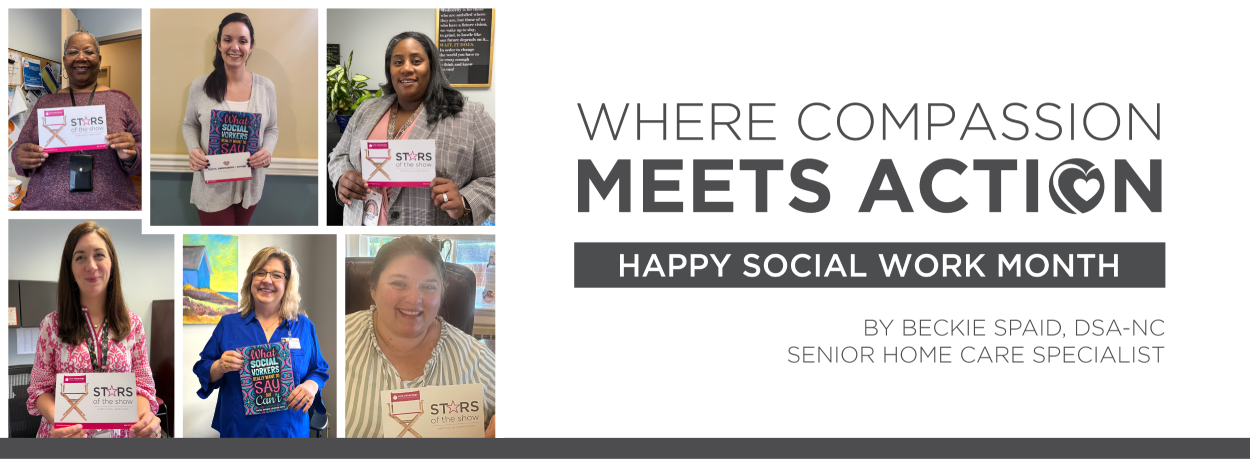
    Happy Social Workers Month!

    What is a Social Worker and why is there an entire month dedicated to honoring them? Well, let me tell you!

    A social worker is a very special person who helps people in challenging situations. Whether these people are children or adults, or even groups of people (like families), social workers are a valuable commodity for them. Think of a social worker as your own personal advocate—someone who supports you and works with you to find community resources to help you.

    Many social workers specialize in helping a certain population of people or working in a specific setting. There are social workers in schools, hospitals, skilled nursing facilities, long term care communities, senior centers, mental health clinics, substance abuse clinics, the military, and more! They help relieve people’s suffering, fight for social justice, and improve both lives and communities.

    In the Care Advantage world, most of the social workers we encounter are focused on patient care and support for older adults. These healthcare social workers help patients and families understand diagnosis, what it means for the future, and what support there may be. They utilize resources that will help you – from making referrals for medical equipment or finding support groups to connecting with businesses that can help you modify your home or lifestyle to live more independently, safely, and happily. If you have ever had a loved one in a hospital or skilled nursing facility, a “discharge planner” is often the social worker that helps your family navigate next steps– whether it is planning the transfer to another facility for continued rehabilitation, or planning the discharge home with agency partners that provide home health or palliative/hospice services and personal care (such as Care Advantage!).

    Social work wasn’t always a formal profession. Some version of it has been around for centuries, but it was usually a volunteer position for helping others. The profession itself originated in 19th Century England, based on casework, poverty relief and social action. Today, social workers hold a bachelor’s or master’s degree in social work through a program accredited by the Council on Social Work Education. Some states or settings may require special licenses. It is best described as a career with meaning, action, diversity, satisfaction, and a variety of options. These professionals use psychology and sociology to solve social issues and improve individual lives. That is not an easy task! It can be emotionally draining, require long hours, and pay entirely too little. Yet, these amazing individuals strive to improve the quality of life and advocate on the behalf of so many people. Many social workers advance their careers to become executive directors of nonprofit organizations, professors, corporate leaders, and even members of Congress. Talk about a background with lots of opportunity!

    Social Work Month was introduced in 1963 by the National Association of Social Workers (NASW) in order to uplift and celebrate the valuable contributions social workers make to our society. Social  Workers Month became an annual March observation in 1984, signed into law by President Ronald Reagan. There are annual themes based on social issues that the NASW wants to bring to light, such as HIV/AIDS, children in poverty, racial and ethnic harmony, and aging parents.

    The 2024 theme is “Empowering Social Workers!” This year, NASW wants to highlight the need for the government, regulators and employers to work to improve pay for social workers as a way of investing in addressing social issues.

    A single social worker can influence an entire life. I think of them as real-life superheroes. They should have to wear capes to work!

    Join me in saying THANK YOU to every social worker everywhere!

  • We’ve Got An IDEA! – I.D.E.A. Council

    We’ve Got An IDEA! – I.D.E.A. Council

    We would like to recognize the efforts of our newly founded IDEA Council! IDEA stands for Inclusion, Diversity, Equity and Accessibility; this council was created to make sure that every workplace in the Care Advantage, Inc.’s Brand Family adheres to the values of diversity and mutual respect that have served us and our communities for so long. The following employees have been selected to serve on this council:

    • Brandi Bowman – Recruitment & Employment Specialist, Wytheville

    • Min Cho – Recruitment & Employment Specialist, Youngs Home Care

    • Jaron Clay (Council Facilitator) – Vice President of Integrations, Corporate

    • Nancy Gallucci – Client Services Advisor, Capital City Nurses

    • April Givens – Home Care Specialist, Mechanicsville

    • Melanie Hill – Director of Healthcare Services, Care Advantage Skilled

    • Olivia Jones (Executive Sponsor) – Executive Vice President of Operations, Corporate

    • Ajee McLaughlin – Recruitment & Employment Specialist, Columbia

    • Latoya Randolph – Talent Acquisition Specialist, High Acuity Team

    • Andrea Sykes – Scheduling & Resource Coordinator, High Acuity Team

    • Claire Talebian – Director of Operations, National Home Healthcare

    After surveying our companies, we’ve identified the top three priorities our Council will address in the coming weeks. We’ve formed three groups to concentrate on the following issues:

    • Improving Our Career Ladder – a workgroup led by Latoya Randolph with support from Min Cho, Brandi Bowman, and Nancy Gallucci (and the HR Department) are working on developing a formal mentorship program open to all employees at every level of the company to make the next rung on their personal career ladder visible and attainable. It will serve to improve transparency into opportunities for internal promotion for all.

    • Honoring all employees’ heritages and traditions – this workgroup, led by Claire Talebian with assistance from Andrea Sykes and April Givens, is looking to see how our ever-expanding company can celebrate the diversity of all our team members through a thorough review of our holidays, activities and events, and social media.

    • Sharing Best Practices – our survey feedback found our Care Advantage West region scored significantly higher than all other regions in their positive feedback regarding our survey questions. Brandi Bowman will work with CAW leadership to try and figure out what is being done well in this region and share these strategies with the rest of the company.

    These are not all the topics the IDEA Council hopes to address in the upcoming months – merely the first three. We appreciate our survey respondents’ frank feedback on several other topics, including accessibility issues at multiple locations, and we will work to address these as well in upcoming meetings and look forward to sharing our progress with you.

    If you have feedback, concerns, or are interested in joining or supporting the IDEA Council, please send us an email at [email protected]. We look forward to hearing from you. Thanks to the council members for a fantastic inaugural meeting—we can’t wait to see the progress from these initiatives!

  • WARNING SIGNS YOUR LOVED ONE NEEDS MORE SUPPORT

    WARNING SIGNS YOUR LOVED ONE NEEDS MORE SUPPORT

    The holidays this year are shaping up to be the most “normal” we have had in a long time. Now that vaccines are readily available, we are able to gather with family and spend time with our older loved ones that we may not have seen in a while.  We are all so excited to gather, whether with family or friends, and enjoy a nice meal together. This is a special time of year, and we hope you are looking forward to spending it with your loved ones.

    The coming season is also a great time to check in on older loved ones you may not have seen for some time. Whether they come to you, or you travel to them, there are some specific signs to keep an eye out for as they could indicate a need for more care or support.

    Red Flags for Seniors:

    1.      Changes in their home environment

    We want to be looking for things like scorched cookware (food forgotten on the stove?), spoiled food in the refrigerator, or the space being generally messier and less organized.

    2.      Sudden weight loss or gain

    This is usually a sign of a health-related issue, lack of mobility, and/or decrease in appetite.

    3.      Unpaid bills

    Is your loved one forgetting about their regular payments? Late notices can indicate memory issues or even financial struggle.

    4.      Physical Frailty

    It is normal for folks to slow down a bit as they age, but pay attention if your loved one is having trouble with day-to-day movement such as climbing stairs or lack of balance while walking.

    5.      Mood changes

    Sudden depression, anxiety, or even hyperactivity can indicate a medication issue or general lack of well-being. We want to gently discuss what may be bothering them to see how we can provide support.

    6.      Medication misuse

    Take a look at any regular medications, you should be able count the pills and check that meds are taken daily if needed and at the specified times of day.

    While we want to be sure our loved ones are safe and sound, try not to be patronizing about checking in. It’s important to protect the dignity of older adults and remember that they are entitled to live however they desire, so long it is safe. Additionally, they may feel embarrassed or self-conscious about any sign of decline. Stay away from directing your older adult, telling them what they should be doing, and try general questions such as:

    ·        “How have you been feeling lately?”

    ·        “I’d love to help out while I’m here, is there anything you need done?”

    ·        “I see your medications are set out; do you feel like they have been helping?”

    If any of the signs you notice feel concerning, please reach out to your local Care Advantage office. We provide licensed and bonded caregivers who engage in disease-specific training and are often able to staff a shift within 24 hours. Utilizing home care does not have to mean giving up your autonomy or dignity. We recognize and respect that caregiving is intimate work and we are confident we can find a great match to support your loved one. From bathing and dressing to offering a listening ear and transporting to appointments, we will have you covered!

  • Thank you to our Veterans

    Thank you to our Veterans

    Care Advantage exists to lift up every community we serve, and this Veterans Day we would like to recognize and thank the men and women who served in any branch of our military. Your commitment every day to maintain safety and security, your sacrifice, and your bravery sets an example to us all and we appreciate your time.

    To show our appreciation, we do our best to ensure that veterans are provided for post-service. Our incredible caregivers are able to provide a wide range of services tailored to assist the needs of our veterans. In 2021, Care Advantage served over 700 veterans in across four states; Virginia, Maryland, Delaware, and Washington, D.C.

    We are extremely proud to say that we have formed strong working relationships with Veteran’s Affairs and Veteran’s Aide organizations across our footprint. Through our extensive network, we have been able to coordinate care for Veterans when they need it most.

    Caregivers are trained to assist with transfers and safe mobility, medication reminders, meal prepping, and companionship. We know how to help veterans keep their independence, while receiving the care they need and deserve. We are always looking to serve those who served our country.

    Our mission to uplift our communities and veterans doesn’t stop at caregiving, we also look to provide work opportunities to our veterans in a variety of roles across the Care Advantage, Inc. brand. Here is what some of our Care Family says:

    “I chose to work with Care Advantage because I love to help others and Care Advantage takes care of some of Virginia’s very own veterans that have retired or been discharged from the military from serving their country.” Tyana Dixon, Army, Care Advantage Newport News – Scheduler

    “I missed being part of a united on-mission fun team and when job searching, I found Capital City Nurses. I saw they cared, had a personal touch and were on mission to help their patients age in place with grace and dignity.” Dawn Warner, Army, Capital City Nurses – Clinical Nurse Manager

    “Joining Care Advantage has been a very good experience.” Jody Underwood, Navy, Care Advantage Gretna – Home Health Supervisor

    “Being part of this company, where our common goal is to provide excellent in-home care to all of our clients, reminds me of my experience in the United States Air Force where we all had to work together.” JP Byrum, Airforce, Care Advantage Inc – Client Services Manager

  • The Hydration Situation: Healthy Water Habits

    The Hydration Situation: Healthy Water Habits

    Staying hydrated is important for everyone, but as we get older it is even more important to make sure we are getting enough fluids. Certain diagnoses, such as dementia or heart failure, can provide various challenges to proper hydration. Here are some ways to combat dehydration:

    Keep a glass of water (or another non-sugary drink)
    nearby all the time and make sure you’re sipping on it regularly.
    Know your numbers! Everyone has different needs for fluid intake based upon their age, gender, activity level, and chronic illnesses. For example, a healthy elderly person needs about 1.5-2 liters of fluid every day, while someone with severe heart failure may have a much lower number. Be sure to consult with your physician to make sure your fluid intake goals are accurate!
    Remember that many foods have fluid too, especially soups and certain fruits, like grapes and melons.
    Be careful when you’re outside in hot weather! It is easy to sweat away fluid quickly, so make sure you bring along some extra water! Get a fun water bottle with measurement markings. You can fill it with your water needs for the day and then watch as you get closer to meeting your goal as the day goes on!

    Dementia, Alzheimer’s, and other disorders can make hydration especially important. They sometimes forget to drink, or do not have a strong sensation of thirst. Here are some ways you can help those you care about that just aren’t drinking enough:

    Find other drinks they like. If they’re not drinking water, maybe iced tea or seltzer would be more enticing? Maybe they prefer their favorite cup or a straw. Catering to small preferences can lead to big gains!
    Remind them to drink regularly. Give them a small glass (1/2 cup or less) to finish then leave them with more to sip on.
    Incorporate foods high in fluid that your loved one enjoys into their diet. Just be mindful of sodium and sugar contents!
    Try Jelly Drops, a hydrating treat that is brightly colored, sweet, and low in sugar.
    Drink with them! Get a glass for yourself, a glass for your loved one, and join them.
    Encourage nutritional drinks, such as Ensure, especially when your loved one is struggling to eat enough as well.

     Always look out for signs of dehydration in yourself and in the elderly

    Fatigue, or feeling tired or sluggish
    Increased heart rate
    Low blood pressure
    Feeling dizzy or light-headed
    Dark-colored urine
    Dry mouth

    Dehydration can turn into a medical emergency, especially in the elderly. Dehydration can trigger atrial fibrillation, a cardiac rhythm abnormality that can lead to stroke. It can cause electrolyte abnormalities that can lead to many complications, including seizures. It can also cause dangerously low blood pressure and many other complications. 

    Combating dehydration in the elderly can seem like a chore, but with the right tools, a fun attitude, and a team approach, it’s easier than you may think!

    ABOUT THE AUTHOR:
    Laurie Uzukwu, RN is a Home Health Supervisor for Care Advantage, Inc – Mechanicsville location. When she isn’t caring for our elderly clients, you can find her on the road at one of her children’s soccer games or dance competitions. She lives in Virginia with her husband, who is also a nurse, children and dog named Brie.

  • CROSS MY HEART AND HOPE TO LIVE

    CROSS MY HEART AND HOPE TO LIVE

    February is American Heart Month, a month dedicated to improving and spreading information on cardiovascular health. Over 650,000 Americans die every year from heart disease, which is about one death every 50 seconds. Cardiovascular disease is the leading cause of death in America almost every year.

    Heart health is incredibly important for everyone, regardless of age, race, or gender. There are three risk factors that commonly lead to heart disease: high blood pressure, high blood cholesterol, and smoking. Taking responsibility for these three conditions can lower your chances for developing heart disease.

    Here are some easy ways to improve your heart health:

    1)     Exercise

    Take a short, 10-minute walk around the neighborhood or find other ways to safely get your heart pumping

    2)     Quit Smoking/Vaping

    Studies show that smoking can increase the amount of plaque in your blood stream, which can lead to clogging. This clogging can lead to Coronary Heart disease and the blockages can lead to heart attacks.

    3)     Lose Weight

    The heart is a muscle that is constantly pumping blood around your body. When a person is overweight, the heart must work overtime to pump the blood around, which leads to high blood pressure. Losing weight can lower your blood pressure and reduce your risk of heart disease.

    4)     Eat Heart-healthy Foods

    Start your day off with a healthy, balanced breakfast including whole grains and some fruit. Add vegetables into your diet to get some healthy fats. Another way to get healthy fats is by trading red meat for fish at least once a week.

    5)     Chocolate

    Thankfully, a healthy amount of chocolate has been shown to increase good cholesterol and lower bad cholesterol.

    6)     Don’t Overeat

    Cut out soda and eat less sodium

    7)     Don’t Stress

    When you stress you elevate your heart rate, which can lead to high blood pressure. Take a moment, relax, and breathe.

    8)     Visit Your Doctor to Get Your Levels Checked

    Checking cholesterol is difficult to do by yourself, going to your doctor and getting a blood test is the easiest way to do it. While you’re there, make sure that you get your blood pressure checked too. Ask your doctor for advice that fits your lifestyle and how you can improve your heart health. 

    Some of these can be challenging for seniors to accomplish on their own, which is why having a caregiver assist seniors through these steps can be very beneficial.

    Caregivers can walk and encourage exercise with seniors. Meal preparation is a helpful task that caregivers can assist with and add healthy foods into seniors’ diets to promote heart health. Stress is sometimes unavoidable, but caregivers can alleviate some stress on the senior and their loved ones by providing incredible care and being present with the senior. Caregivers are able to drive seniors to their doctors’ appointments to get their heart checked out.

    Together, by taking our heart health into careful care, we can reduce our risks for developing heart disease.

  • Top Ten Cold Weather Tips for Seniors

    Top Ten Cold Weather Tips for Seniors

    Not many people go around saying “Happy Winter.” It’s cold and most of us don’t like it, but winter is Mother Nature’s way of hitting the reset button on life. So, we tolerate the blustery bite that Old Man Winter brings each year. However, as we age, it gets harder for our bodies to tolerate such extreme weather conditions. Here are our top 10 tips for cold weather preparation for seniors.

    1. Stock emergency resources in their homes. Emergency kits must be easily accessible and should include water, flashlight, batteries, radio, and blankets. Seniors should have at least a seven-day supply of prescription medications and a three-day supply of food and water on hand. Although I do encourage you to have a stocked cabinet.

    2. Watch your temperature.  Seniors body temperatures tend to run lowered than most adults. Especially if they have cardiac issues, hypothyroidism as well as on blood thinners. Hot drinks are a very good idea for anyone whom is cold as it will help hydrate them as well. Thermostats should be set to 68 degrees to prevent hypothermia and prevent pipes from freezing.

    3. Dress smart for cold weather. Make sure their clothing is season appropriate – long sleeves, long pants, thermal socks. Layered loose-fitting clothing; gloves or mittens. Wearing a hat protects against heat loss, as close to half of body heat is lost through the head. Ensure they have a winter jacket, scarf and correct shoes.

    4. Keep an eye on nutrition. With the heat being on- everyone tends to stay a bit dry. Encourage constant liquids- keep a cup of water or ice with them at all times. A diet full of fruits and vegetables help with the needed vitamins to help combat winter colds. If unable to eat a balanced diet- talk to your doctor about supplemental vitamins such as Vitamin D, Vitamin C, Zinc.  Keep extra food on hand in the freezer as well as bottled or canned fruit juices and non-fat milk powder. Meals on Wheels is a great resource for Seniors needing a hot meal a day- Local DSS can assist with getting this set up.

    5. Identify fall risks. Often everyone will take off their wet boots when they get home and walk around the house in socks, which often leads to slippery surfaces and falls.  Encourage them to wear slippers or grippy socks (Thermal socks are wonderful for grip as well as warmth) around the home. Keep driveways and walkways clear of snow- use ice melt or walk on grassy surfaces when possible.

    6. Eliminate potential fire risks. Space heaters are great for warmth in the winter. Make sure they are in the middle of the room, not being used as a table with items on top. As well as being plugged directly into an outlet versus a power strip. If using electric blankets- check the wiring is ok. Discourage a heat pad as it can cause burns to the skin. Check to make sure you have a fire extinguisher and a working smoke alarm as well. If not- your local fire department will bring out a smoke detector to your home and install for you.

    7. Encourage activity and try safe exercises at home. During the winter- Seniors can become sedentary and depressed with the weather. Encourage them to get up and walk around, rocking in a rocking chair is great for their bone health as well as their muscle strength. If you notice they have had a change- always reach out to your doctor and see about having some physical therapy to keep those muscles going. The YMCA has a program called Silver Sneakers- great for interaction and exercise.

    8. Have a plan for winter emergencies. If your power goes out, who is going to be able to come over and assist. Have your emergency readiness kit available as well as extra blankets. Keep a list of the local fire department, electric company, and family contacts.

    9. Get your Flu/Covid Vaccine. Everyone should get their flu shot yearly as long as they do not have an adverse reaction to it. Also encourage the COVID vaccine and booster as well. It’s also important that all family members who interact regularly with your senior loved one get the shot – this will help to keep your senior healthy, and it will benefit the health of your younger family members as well

    10. Boost Mental Health. Winter time can bring on the blues. Some people are affected by Seasonal Affective Disorder or Depression. Open the blinds in the home, Use light colored curtains to allow the natural light into your home. Happy Lights are a great way to get a boost of Vitamin D in the winter time. Stay involved with your social circle and regular activities.

    ABOUT THE AUTHOR:

    Emily Dix is a nurse who resides in South West Virginia with her family. When she is not helping patients live long healthy lives, she enjoys camping in Virginia State Parks and cheering on her son at his latest basketball game.

  • CARING FOR YOUR LOVED ONES THIS THANKSGIVING

    CARING FOR YOUR LOVED ONES THIS THANKSGIVING

    Thanksgiving is the wonderful time of year that we get to gather around with family and loved ones to eat a delicious meal and talk to family we haven’t seen for a while. This annual get-together is a staple in America, and now with vaccines and boosters being rolled out, we can safely enjoy a meal together again.

    This family reunion is a great time to check up on your senior loved ones, to see how they are doing in their own home or with others. Care Advantage can assist them in their own homes, looking after them, helping with activities of daily living, and being an ear to listen.

    COVID has been difficult for many seniors, especially those who are living alone. Here are some quick checks that you can do to make to ensure that your loved ones are safe.

    If you’re having Thanksgiving at a senior’s house, here are some signs to look out for:

    – Laundry piling up

    – Spoiled food in fridge

    – Tripping Hazards, such as:

                  – loose rugs

                  – items on the floor

                  – poorly lit areas

    Care Advantage is able to provide laundry and linen cleaning, meal preparation and clean up, and mobility assistance in their home.

    If your elderly loved ones are coming to your house, here are some other signs to look out for:

    – Difficulty performing familiar tasks, such as:

                  – eating

                  -dressing

                  -walking

    – Inability to complete sentences

    – Lack of motivation

    – Struggle to recall names of familiar people or objects

    – Extreme changes in mood

    – Loss of interest in hobbies

    These can be early signs or signals that they may need some extra help around the house. Take a moment to fix the immediate issues; light the dim areas, fasten loose rugs, toss the spoiled food, and then spend the rest of the day with them.

    Work on a puzzle with your senior, help them make a craft with the kids, play a game as a family, prepare a memorable dish together, flip through one of their photo albums. Be present, engage with them, and create wonderful holiday memories this year.

    Have a great, safe Thanksgiving and check in on your loved ones.

    Mac Bowman is a Senior at Virginia Commonwealth University majoring in Public Relations. He is a native of Powhatan County, Virginia and enjoys camping, activities with his church groups and relaxing with his family and friends.