Category: Brand Specific

  • The What And Why Of Advance Directives

    The What And Why Of Advance Directives

    ADVANCE DIRECTIVES

    People often don’t know about them until the situation is less than ideal. We want to change that. Part of happier aging is planning for your future so everything doesn’t come crashing down without you and your loved ones being prepared. When you think about aging in place and happier aging, it’s important to remember the planning piece of the big picture. Advance directives, when properly prepared and executed, have the power to make very difficult times much easier. They can also ease today’s worries, giving you the peace of mind that allows you to live each day joyfully. Read on.

    WHAT ARE ADVANCE DIRECTIVES?

    You’ve probably heard stories of someone needing to give medical and/or financial direction for themselves, but were too ill or injured to carry out or express their desires. You may recall the 2005 case of Terry Schiavo that gripped the nation and ignited conversations about the need for advance directives. At the age of 25, Terri collapsed from heart failure resulting in massive brain damage that left her in a permanent vegetative state. From 1990 to 2005, Terri’s family battled over what Terri’s wishes would have been.

    Have you imagined what your wishes would be should you be unable to express them at such a time? Your next step should be to prepare your advance directives. Advance directives are legal documents that spell out your wishes for end-of-life care in the event that you are unable to do so. They allow you to direct ahead of time, your family, friends, and healthcare professionals, on how you would like your care decisions to be made. Advance directives include living wills and powers of attorney.

    HOW DO I GET A LIVING WILL?

    Visit an attorney for a standard living will form or you can complete one on your own. One of our favorite resources is the 5 Wishes. For a small fee, you can complete a living will online or via paper. It’s easy to understand, written in everyday language, and takes a holistic approach to writing a living will. A free online option is also available from the National Hospice and Palliative Care Organization and offers downloadable forms unique to each state. Depending on your location, specific state requirements may influence who has to sign your living will as a witness.

    You are never too young to create a living will and you can always change it later. If you do make changes, be sure to provide updated copies to all those who will be involved in your care–family, friends, and healthcare professionals.

    Don’t expect that you will complete your living will in one sitting. It is normal to want to discuss your feelings with loved ones and to contemplate end-of-life scenarios before committing your answers in writing. Take your time, but be sure to make the time.

    WHAT IS A POWER OF ATTORNEY?

    In its simplest terms, a power of attorney (POA) allows you (the principal) to decide who will act on your behalf if you become incapable of making decisions for yourself. The person who acts on behalf of you is called the agent.

    While there are several different types of POAs, know that when talking about advance directives the type of POA put in place is a durable POA. What’s the difference between a durable POA and a general POA?

    • A durable POA goes into effect when the principal becomes incapacitated and expires upon the principal’s death.
    • By contrast, a general POA expires when a principal becomes incapacitated.

    It is important to know the difference between the two and remember that when preparing advance directives you need a durable POA, not a general one.

    There are two types of durable POAs–medical and financial. You may wish to have one person handle your medical decisions and another to handle your financial matters, in which case you will have both types of POAs. Or you may want to have all decisions handled by the same person, so your durable POA would give medical and financial power to one agent.

    TODAY’S TO-DO

    There is no better time than today to add “GET ADVANCE DIRECTIVES” to your to-do list! We know that when plans for the future are put in place, people are happier, more confident, and less stressed in their daily lives. And we all know the feeling that comes from crossing something off of a to-do list!

    UPDATE: PLANNING IN THE AGE OF COVID-19

    Think about the last time you reviewed your will. Do you have one? Although grim, the current COVID-19 coronavirus pandemic has many Americans considering their end-of-life and estate plans for the first time.

    Additionally, a growing number of people in the United States are beginning to evaluate how prepared they are to deal with a serious medical emergency. Since the start of the coronavirus outbreak in the US,  online legal websites that provide legal documents such as last will and testament forms, do-not-resuscitate forms, and living will forms have all seen significant spikes in traffic.

    This increased interest in estate planning documents paints a dramatic picture of just how frightening this virus is, and illustrates how many Americans are choosing to take control of the situation now rather than later. Whether you’re new to planning your estate or already have existing documents on file, filling out the proper estate planning forms is a good precaution for everyone. Learn more about estate planning in the age of COVID-19.

    Special thanks to Jeanne Dukes of Lewes Counseling for contributing to this piece.

    Additional Reading:

    Advance Directives, MedlinePlus
    Things You Can and Can’t Do With Power of Attorney”
    5 Misconceptions About a Power of Attorney

  • Mental Competence And When To Step In For Mom And Dad

    Mental Competence And When To Step In For Mom And Dad

    There’s no doubt about it–helping your loved ones can be difficult. You observe little things at first, such as forgetfulness. You let it go for a while, but soon you find yourself trying to evaluate a host of “little things” that collectively are adding up to the big question, “Is Mom or Dad mentally competent?” We have some answers and also some tough questions to help you evaluate your situation. Read on for more in-depth answers, and see our 3 Quick Questions to Ask (at the end) when you’re not sure what to do.

    WHAT IS MENTAL COMPETENCE?

    According to the Public Legal Education and Information Service of New Brunswick, “Mental competence is the key to rational decision making. Unfortunately, disease or injury can affect the mind making it hard for a person of any age to make sound decisions. Sometimes it may be impossible for the person to look after themselves or their affairs.”

    WHEN DO YOU NEED TO STEP IN TO MAKE DECISIONS FOR MOM AND DAD?

    There’s no easily, identifiable time and there is no easy formula as to when you should step in. But you and any other caretakers need to have a conversation with your parents focused on SAFETY. Ideally, their physician would partake in this conversation as well.

    • For instance, you don’t want to take away their license, but they are forgetful so they go the wrong way or neglect to stop at the lights sometimes. That’s unsafe.
    • Or one morning when you visit Mom you realize the oven is on, from dinner the previous evening. That’s unsafe.

    Be mindful that you distinguish between a true safety issue and a “matter of opinion.” If a physician or other professional deems your concerns as your opinion, they will not be willing to take the reins from Mom or Dad just yet. Simply disagreeing on what is best doesn’t mean your loved one isn’t capable of making his/her own decisions.

    If it IS a safety issue, then it may  be an issue of mental competence and it is time to step in.

    WHEN YOU KNOW THEY NEED HELP, DO YOU MAKE ALL DECISIONS OR JUST SOME?

    If they’ll let you help make decisions, keep it simple and do it without getting involved in legalities. ALWAYS let them make as many decisions as possible, whether or not they are mentally competent. You can step in when necessary. No one likes to lose their freedom to choose, so even if they can’t drive anymore, be creative in the way you maintain their ability to have a say. “Do you want to go to the grocery store or the post office first?” “Would you like to stop for lunch before or after we pick up your prescription?” Choices like these can go a long way in helping them to feel valued and heard, at a time when they may otherwise be feeling a sense of loss.

    Start small–unless it’s a safety issue–and always give choices.

    WHAT IF MOM AND DAD DON’T WANT HELP?

    Difficult behaviors. That’s what they’re typically called in the medical world. And refusing help usually falls into this category. Reading and learning as much as you can about how to deal with difficult behaviors will be of great value to you as you navigate this chapter of your parents’ care. Even training for dementia and Alzheimer’s can be extremely helpful (whether or not your loved one has these diagnoses) because it helps you understand more about the aging process, signs to look out for, and helpful things you can do.

    If Mom and Dad don’t want help, you have a few options:

    1. If they are competent (they can make decisions for themselves mentally), you can continue to be a support, provide guidance and resources as they need it, and be alert for any changes in condition that indicate they may be unable to safely make decisions. And while there is nothing you can do to make your loved ones accept help, you can be prepared by understanding future options for care:
    2. Ensure there is a Living Will (Advanced Directive) and Power of Attorney items filled out (General, Medical, Financial are all types of Power of Attorney).
    3. Read our handout “How to Prepare for Your Golden Years
    4. If they are NOT competent (they can’t make decisions for themself) and you have a Power Of Attorney (POA), you can ensure the physician has them officially declared incompetent and then you can assume decision making for them.
    5. If they are NOT competent (they can’t make decisions for themself) and you do NOT have a POA, you can ensure the physician has them officially declared incompetent and consult an elder law attorney to ensure appropriate and legal documentation is created and implemented.

    3 QUICK QUESTIONS TO ASK WHEN YOU’RE NOT SURE WHAT TO DO:

    1. Is Mom or Dad mentally competent?

    2. Do I have our team ready?

    1. Find a good Elder Law Attorney (or Estate Planning attorney)
    2. Know the contact information for anyone else that needs to be involved with a decision for your parents (i.e., their siblings, their caretakers, additional family)
    3. Know the people involved in your loved ones medical care (doctors, social workers, case managers).

    3. Do I know what to do if Mom or Dad can’t help themselves anymore? See our Golden Years handout for good questions to consider.

    If your Mom or Dad doesn’t have the ability to make decisions but continues to do so, safety, quality of life, family relationships, and health can suffer quickly. The bottom line: Understand your options and make the best informed decision you can with the resources you have.

    Need some help going through the process? Find all our contact information at our website: silverlininghealthcare.com.

    Additional Resources:

  • What Happens After I Call A Home Care Agency?

    What Happens After I Call A Home Care Agency?

    While no two health care agencies operate exactly the same, there is a general sequence of steps that new clients can expect after they decide to make that initial call.  We’ve outlined the 5 steps you can expect when calling Silver Lining Home Healthcare. Let’s start with a fictitious, but very common, scenario:

    Mrs. Greeley is a 76 year-old who lives at home alone. She can no longer drive and, after her last appointment with the doctor, she knows she isn’t taking her medication properly. She’s also having a lot of trouble putting on her socks and shoes and almost fell last week trying to get the laundry down the steps. Her son Jason stops by and helps when he can, but he is concerned about his mother’s well-being. He isn’t sure what options he has so he begins an on-line search using terms such as “home health care” and “in-home care.” He is overwhelmed with the search results.

    1. Jason calls Silver Lining Home Healthcare and expresses that they don’t know what they want right now and just wants information. He’s wondering if he even called the right kind of company as there were so many to pick from. After asking a few questions, the Silver Lining Home Healthcare team determines that Jason has called the right place.
    2. A Consult specialist sets up a time that works for Jason and Mrs. Greeley to visit in her home and to talk about what home care is, other options that exist, what insurance covers, and budget options. Together they develop a care plan and schedule a home safety evaluation as required by Delaware state law.
    3. Mrs. Greeley, Jason, and the Silver Lining Home Healthcare team determine that 3 hours a day, 3 days a week will be a perfect fit for Mrs. Greely’s needs. Now it’s time to find the perfect caregiver for Mrs. Greeley! Focusing on personality traits, home environment (Mrs. Greeley has a cat so no one with a cat allergy!), and the required level of care, Silver Lining Home Healthcare sets up initial visits with their best caregivers.
    4. The customized care plan that was completed at the consult guides the care for Mrs. Greeley. Her plan focuses on dressing, doing errands, going to appointments, and general safety for quality of life. All the caregivers coming in know what to do and how to do it best for Mrs. Greeley. Warm transfers or buddy visits with any new caregiver are provided so everyone feels comfortable!
    5. Jason and Mrs. Greeley receive monthly calls from Staci at the Silver Lining Home Healthcare office to check in, and Jason gets an email survey every 3 months (since he’s Mrs. Greeley’s main contact). Their nurse, Angela, sees them every 60 days to ensure the care plan hasn’t changed and that Silver Lining Home Healthcare is delivering the peace of mind we promised!

    Call with confidence knowing what to expect after the friendly voice on the other end of the line says, “Thank you for calling Silver Lining Home Healthcare.” We’re waiting to hear from you!

  • Caregiver Credentials

    Caregiver Credentials

    KNOW WHO’S CARING FOR YOUR LOVED ONE

    Have you ever been to a doctor’s appointment or had a visit to the hospital and noticed how many different medical personnel there can be tending to you? Unless you ask, it can be hard to know exactly what each person’s job title is let alone what credentials they carry. The same can be true for home care. Are all nurses the same? How does a Certified Nurse Assistant differ from a Companion?

    BE IN THE KNOW

    First and foremost, any company coming into your home should be licensed, bonded and insured. Don’t be afraid to ask for proof of business license, home health license, and insurance. You can also do an entity search (in any state) to be sure the company is in good standing. A free search will allow you to verify that a company has an active license in the state you are searching.

    There are many people who may play a part in your wellness journey or that of your loved one. Let’s take a look at some you may meet along the way.

    REGISTERED NURSE (RN)

    Registered Nurses are the primary go-to practitioner for most doctor’s offices, hospitals, and facilities because they can do almost anything a physician orders, are trained on assessments, and have the expertise and critical thinking skills to operate without extensive oversight. RNs coordinate care, perform diagnostic test and analyze results, instruct patients on how to manage illnesses after treatment, and oversee other workers such as LPNs, nursing aides, and home care aides.

    Registered Nurses all have to pass the same exam nationwide, called the National Council Licensure Exam (NCLEX) for Registered Nurses. Some RN’s start with an Associate Degree (ADN) and some have a Bachelor of Science in Nursing (BSN). Regardless of level of education, all have to pass the same test.

    Silver Lining Home Healthcare has Registered Nurses overseeing all care and working closely with LPNs and CNAs to administer the right customized care.

    LICENSED PRACTICAL NURSE (LPN)

    An LPN reports directly to an RN and can carry out most of the same job responsibilities, with a few tasks that they must have an RN do for them. They are responsible for the tasks associated with the care of their patients and are expected to report even minor changes in a patient to an RN or other medical professional. Typically, becoming an LPN requires about a year of education culminating in a certificate. An individual must pass the National Council Licensure Examination for Practical Nurses.

    CERTIFIED NURSING ASSISTANT (CNA)

    A CNA assists patients with activities of daily living, monitors medication reminders and vitals, and offers emotional, physical, and social support. A CNA reports to an LPN or RN, and will always have oversight. He or she will have 75-150 hours of training in a CNA program and must pass a state-sanctioned competency test.

    MEDICAL ASSISTANT

    You probably know the medical assistant as the person you meet upon entering an exam room at a doctor’s office. He or she will ask you for some health history, record information, and may take your vitals. A medical assistant will also perform appointment scheduling and data entry. Completion of a one year certificate program or Associate Degree is standard; certification is not legally mandated. This person differs from a CNA in the type of training; CNAs are typically more trained for ‘hands-on’ care like bathing/dressing, while a Medical Assistant may be more trained in procedures like performing an EKG (a heart monitoring test) or doing lab draws.

    COMPANION

    Hiring a Companion is a great way to provide personal assistance, light housekeeping and meal preparation, and friendship for your loved one who otherwise would spend much of their time alone. While there is no formal schooling required, requirements will vary from employer to employer. Employers will consider not just work experience, but life experience as well. They’ll look for individuals committed to helping others with warmth and compassion.

    PHYSICAL THERAPIST (PT)

    A Physical Therapist, often referred to as a PT, may visit your loved one’s home to help him or her restore function, improve mobility, relieve pain or prevent or limit permanent physical disabilities through exercises and treatments. A PT will hold a Doctor of Physical Therapy Degree (DPT) and have passed the National Physical Therapy Exam.

    Physical Therapist Assistants (PTA) work under the supervision of a PT and help administer treatment plans as directed by the PT. To become a PTA one must graduate from a 2-year accredited program and pass a licensure exam.

    OCCUPATIONAL THERAPIST (OT)

    An Occupational Therapist helps patients who are injured, ill, or disabled through the therapeutic use of everyday activities. They help them  develop, recover, improve, and maintain the skills needed for daily living and working. Often an OT will assess home and work environments and recommend adaptations that will improve one’s quality of living.

    A master’s degree is required to become an OT and an associate degree is needed to become and OT Assistant. Both professions require passing the National Board for Certification of Occupational Therapy exam followed by state licensure.

    SOCIAL WORKER

    A social worker is committed to improving the social environment and well-being of people by facilitating, and developing resources. Our social worker at Silver Lining Home Healthcare is Jeanne Dukes of Lewes Counseling. Jeanne is an invaluable resource in helping seniors transition to home health care, and for understanding a variety of other options. She also specializes in mental health.

    QUESTIONS TO ASK A HOME CARE PROVIDER

    Regardless of who is coming into your loved one’s home to provide care, be prepared to ask some important questions, such as:

    • Who is in charge of my care?
    • Will I see you regularly?
    • What can I expect you to do when you’re here?
    • What is the best contact number to reach my point of care?
    • Can I access you 24/7?
    • Any other questions that may be unique to your loved one’s situation or preferences.

    And don’t forget about questions that are more personal in nature, the kind that go beyond the credentials someone carries, such as:

    • What made you decide to become a [fill in the blank]?
    • How long have you been in this field?
    • Are you from this area?
    • What do you like to do when you’re not working?

    At Silver Lining Home Healthcare, we are all about building client relationships that feel like family. We want to know what makes your loved one’s heart sing and what fulfills his or her days. We welcome questions from our clients that will help them know and trust our caregivers and set them on a path of home health care that is rooted in trust and compassion.

    SOURCES/ADDITIONAL READING:

    “LPNs vs RNs.” NusingLicensure.org, www.nursinglicensure.org/articles/lpn-versus-rn.html.

    “Differences Between Occupational Therapy and Physical Therapy.” PHYSICAL THERAPY WEB, www.physicaltherapyweb.com/differences-occupational-therapy-physical-therapy/.

    “Become a Social Worker.” Social Work License Map, www.socialworklicensemap.com/become-a-social-worker/.

  • Levels Of Care At Home: Determining Needs And Understanding Options

    Levels Of Care At Home: Determining Needs And Understanding Options

    Are you looking for home care for a loved one but not sure where to begin? Perhaps you’re seeing clues that mom or dad could use some help at home. Or maybe your search is more urgent as in the case of a pending hospital discharge that’s happening faster than you anticipated.

    Stop. Take a breath. Silver Lining Home Healthcare can help you determine how much or how little care your loved one needs and provide that care in the comfort of his or her home.

    Let’s start with how much care. We’ve devised a simple-to-use Level of Needs Calculator, as a tool to determine how much care someone needs. Use this as a guide, keeping in mind that every situation is different and for that reason, we always customize and tailor care for our clients. Our clients are all unique; their care should be, too!

    LEVEL OF NEED CALCULATOR

    The amount of care your loved one needs is part of the picture. The other part is the type of care needed. There are 2 types of care—non-medical/non-skilled and medical/skilled.  Silver Lining Home Healthcare can provide both.

    1.     Non-medical/non-skilled – This type of care includes companion and personal care. It does not always require a physician’s order. Care can be provided by a companion who is not required to have medical training or by a Certified Nursing Assistant (CNA). A CNA is required to complete a state-approved program with practicum experience. Running errands, providing transportation, bathing, dressing, and cooking are all examples of the type of care provided at this level.

    2.     Medical/Skilled – This level of care always requires a physician’s order. It includes nursing and therapy services and can only be done by Skilled Home Health Agencies, like Silver Lining Home Healthcare. Care is always provided by a licensed professional, such as a Registered Nurse, a Licensed Practical Nurse, an Occupational Therapist, or Speech Therapist.

    Sometimes, getting your parents or loved one to accept help can be a challenge. If you’re worried about having this conversation with them, speaking to a professional at Silver Lining Home Healthcare beforehand can help prepare you. Likewise, if you’re not sure about what exactly they need, don’t let a feeling of uncertainty stop you from learning more. We’re here to listen, advise, and if needed, devise a home care plan that promotes happier aging for your loved one and you.

  • Tips And Tricks To Living With Forgetfulness

    Tips And Tricks To Living With Forgetfulness

    Does a friend, loved one or someone you know have difficulty remembering things? We all do at some point, but with certain age-related diseases, forgetfulness may become a part of daily life. Here are a few tips and tricks that can help with forgetfulness and help maintain independence as long as possible. (Remember, the primary factor when considering how long to remain independent is SAFETY.)

    1) Manage medication – Medication non-compliance is a common occurrence and very often the reason people go to the hospital, are readmitted, or have complications. A few ideas:

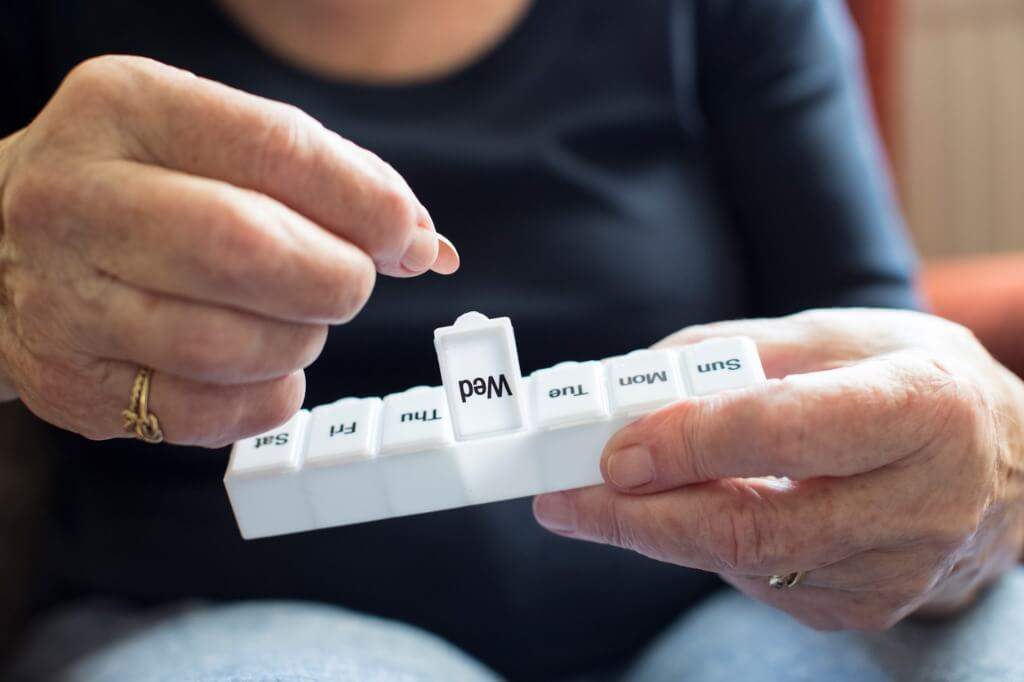
    a)    Pill Planners – Better than a pill bottle, pill planners allow your loved one to see what they must take and when they must take it. Pill planners should be filled before the beginning of each week by a licensed professional agency, family member or friend.

    b)    Pill Packing – Get medications pill packed. Pill packing is useful when medications are taken on a regular and consistent basis. Pills are packaged according to day and time with this information printed on each package. Check with your local pharmacy to see if this service is available or consider using a company like PillPack.

    c)    Medication Alarm Clock – Get a ring, a ding, or a buzz from a medication alarm clock reminding you or your loved one that it’s time for meds. You’ll find a large selection of medication alarm clocks on-line using a Google search or browsing on Amazon. From simple to sophisticated, there are many designs and functions from which to choose.

    d)    Medication Reminder Apps – Cell phones and/or tablets can become alarm clocks with a medication reminder app. Search Google Play or iTunes for many options.

    e)    Alarm.com Wellness – Among the many services that Alarm.com offers, subscribers can program auto-phone calls to serve as medication reminders.

    f)     Phone Calls – An oldie but goodie, a friendly phone call from you or a neighbor can also get the job done.

    2) Turn off the gas/electric to the stove – If your loved one still loves to cook, have a volunteer or friend come over regularly to be present when they do so. While this may seem like it inhibits independence, it allows your loved one to stay independent at home LONGER because they’ll be safer.

    3) Have daily checklists to remind a loved one what needs to be done! Completing a daily checklist also nurtures one’s desire to be productive, giving our loved ones a sense of purpose at the beginning of each day and a sense of accomplishment at the end. No task is too small for the list! A few ideas:

    a)    Water plants

    b)    Make bed

    c)    Eat breakfast/lunch/dinner

    d)    Do stretches and/or exercises

    e)    Make a grocery list

    f)     Organize a drawer

    4) Always have a plan for doctor appointments – Missed doctor appointments are another contributing factor in the decline of many people. Troubleshoot this right away by creating a transportation plan well in advance of the appointments.

    5) Locate important documents – Now is the time to get copies of them (i.e., wills, power of attorneys, health care directives, etc.)! Don’t risk important documents being lost or forgotten by your loved one. Make copies and/or put originals in a safe deposit box for safekeeping.

    Forgetfulness or confusion isn’t always just absentmindedness; knowing the difference can be tough. It’s difficult to transition from “come on, you know the answer” to “I’ll take care of it for you”, but it’s an important transition that makes your loved one more comfortable and safe and leaves you less frustrated.

    For information on our Medication Management program or Club Membership (where we help you remember appointments!), pop in on our website silverlininghealthcare.com.

    Additional Reading:

    Caregiver’s Guide to Understanding Dementia Behaviors

  • Hospice Care at Home During COVID-19

    Hospice Care at Home During COVID-19

    The recent pandemic has created many challenges in numerous areas of our society, including elder and patient caregiving. For professionals in home care, it is important to balance caring for both our patients as well as ourselves and taking the necessary steps to prevent the spread of COVID-19, which can be particularly harmful to home care patients who are often elderly and already have chronic health conditions.

    We at Coastal Home Care are taking every precaution necessary to ensure the health of our patients and staff during these difficult times, following both state and federal guidelines and suggested best practices. We do all of this while also working as hard as we can to continue providing excellent hospice nurse, post-operative, dementia, and elder care services to families and their loved ones throughout Wicomico County, MD. For over ten years, we have dedicated ourselves to serving our patients through personalized caregiving.

    Here is how we have continued to provide hospice care throughout the current pandemic:

    How Caregivers Should Support Others

    During this time, our primary concern has been continuing to give the best possible care to our hospice patients. As we’ve stated before, part of our procedure now includes following guidelines from official sources such as the CDC. Below, we list some of the guidelines we are following most closely when taking care of hospice care and other home care patients:

    • Ensuring patients who are sick or are showing symptoms of illness are also following their doctor’s instructions and taking their medication on time.
    • Providing over-the-counter medicines when needed to help relieve discomforting symptoms including fever, coughing, as well as aches and pains.
    • Assisting them with grocery shopping, filling prescriptions, and performing household chores, to provide them with as much rest as possible.
    • Separating patients from their pets, especially when they are sick, as much as possible.
    • If they are sick, we make sure they receive plenty of rest and drink a lot of fluids to help alleviate symptoms and recover.

    How Caregivers Should Care For Themselves

    Additionally, part of our focus within hospice care is to ensure our patients are safe from any potential infections by taking care of ourselves. That is why we are doing our best to prevent the spread of COVID-19 through the various measures recommended specifically to caregivers from the CDC. Here are some of the guidelines we continue to focus on:

    • Limiting contact with patients and fellow staff through social distancing, especially when you or they are at a higher risk of severe illness due to COVID-19.
    • Decreasing the number and frequency of visitors, thereby decreasing the chances of transmission.
    • If you and your patients must be in a shared space, ensure there is increased air circulation to ventilate the respiratory droplets through which the virus is transmitted. This can be done by opening up a window and installing a plug-in fan.
    • Eating meals in separate rooms from others, or if your patient must be fed, feeding them in their own room.
    • Avoid sharing personal items, especially if you or the other individual are showing signs of sickness.
    • Both caregiver and patient should wear face coverings to prevent potential transmissions and to keep one another safe, both at home and while outside of the home.
    • Caregivers should also wear gloves whenever they are handling various bodily fluids, and practice washing their hands often or using hand sanitizer.
    • Washing ‘high-touch’ areas within the patient’s home as often as possible using soap and water, then household disinfectant.
    • Only dispose of waste and other items into trash cans lined with trash bags to easily and safely throw them out. We recommend providing a single lined trashcan specifically for individuals that are sick.

    What we notice in this list is that much of what is best for caregivers to do for themselves is also often what is best for our patients, which reflects precisely what we work to do during this challenging time.

    Coastal Home Care: Excellent Hospice Nurse Service in Wicomico County, MD

    For even longtime home care providers like us, the pandemic has forced us to contend with many issues along with those we often work through with our patients. During this time, we are doing our best to respond effectively and carefully by performing all the best practices we’ve listed above.

    We do this to support our communities through the various difficulties beyond those we face, as well as through providing quality hospice nurse support, elder home care, medication management assistance, and many other services that support you and your loved one.

    At Coastal Home Care, we seek to help as many patients and families as possible in relieving the pressures and stresses the pandemic has caused. Our Plan of Care procedures are specific to helping families with difficult schedules, financial troubles, and the many concerns involved in providing care to an elder loved one.

    Contact us at (866) 687-7307 and schedule a free consultation today.

  • Becoming A Certified Nurse Assistant (Cna)

    Becoming A Certified Nurse Assistant (Cna)

    With CNAs being in high demand in today’s job market, we thought it a perfect time to explore the vital role they play on health care teams. Are you or is someone you know considering entering the healthcare profession? Are you exploring options for a career change? Becoming a CNA might be just what you’re looking for. Read on!

    WHAT DOES A CNA DO?

    While you will find CNAs in hospitals, nursing homes, doctors offices, and on home health care teams, the duties and responsibilities are generally similar. They include:

    • Assisting patients to wash and dress themselves
    • Assisting patients to maintain their own hygiene needs
    • Assisting patients to maintain their own nutritional intake
    • Documentation of care and interventions
    • Monitoring medications
    • Taking patient observations including blood pressures, respirations and temperature
    • General housework and cleaning duties
    • Providing emotional, social and physical support

    How do I become a CNA?

    In the state of Delaware, there are 3 basic requirements to become a CNA:

    1.     Complete a CNA training program approved by the Department of Health and Social Services.

    a.     The DELMARVA American Red Cross offers a free, fast-paced CNA training program. Students are out in the workforce in just four or five weeks. Click here for more information.

    b.     For a list of other approved training programs in the state of Delaware, click here.

    2.     Take and pass a written competency test.

    3.     Take and pass a clinical competency test.

    SILVER LINING TALKS ABOUT BEING A CNA:

    Dorrina Langiu, Director of Passionista Happiness – CNA:

    “I enjoy being a CNA because I get the opportunity to make a difference in someone else’s life, big or small. It is a satisfying feeling to know you can help someone who, most often, is at the most vulnerable point in their life. A tip from me: always put yourself in the client or family member’s shoes. They probably never expected to need the help that they are requesting and it can be overwhelming sometimes. Another tip, always be patient. No matter what the situation is, patience is truly a virtue and always appreciated. Being a CNA is not for the faint of heart. You are the front-line caregivers for these people; you will laugh with them, cry with them, feel for them. You will get attached to them, which to me is the hardest part of being a CNA, but at the same time the most rewarding part. To know you made a difference in someone’s life when it mattered most is something I treasure every day.”

    Shawna Cohen – Full Time CNA

    “I love being a CNA because I love helping people who can no longer do things for themselves. I get tremendous satisfaction from knowing I can put a smile on a client’s face. I am not only helping the client but also the family. They can rest easy knowing I am there and that their loved one is getting the best care.”

    Crystal Wright – Full Time CNA

    “I love being a CNA! I love helping people, especially the elderly because they often can’t help themselves at this point in their lives. It is rewarding to bring a smile to their faces and know that I am making them–and their families–happy. I also enjoy the challenge of juggling different tasks every day.”

    Tiffany Rubin, CEO – RN:

    “My eyes light up when I talk to someone who is considering becoming a Certified Nurse Assistant. Why? It was the first step I took in my healthcare career and in hindsight I didn’t know how important it would be. Yes, it was the step that set me on my path to become a registered nurse. Yes, it was the step that led me to become CEO of Silver Lining Home Healthcare. But even more importantly, it was the step that helped me realize how much I truly enjoy caring for others. It was the step that sparked my passion for helping people bring joy and happiness back to their daily lives. So when someone asks about taking the first step toward becoming a CNA, I am excited for them because what awaits them can far exceed what they ever expected.”

    WANT TO KNOW MORE?

    We’d love to talk to you! Whether you are already working as a CNA or are considering becoming one, we’d be happy to share our experiences, our stories, and our passion with you. Give us a call at 302-359-5661 or pop over to our page to apply and ask questions!

    Sometimes the smallest step in the right direction ends up being the biggest step of your life.Tip toe if you must, but take the step.”

    Additional Reading:

    20 Reasons to Become a CNA
    Becoming a Certified Nursing Assistant

  • Let’s Get Physical: A Look Into The Practice Of Physical Therapy

    Let’s Get Physical: A Look Into The Practice Of Physical Therapy

    IN THE BEGINNING

    The use of exercise and manual therapy for pain relief dates back as early as 460 B.C., but it was in the early 1920’s when physical therapy (PT) really found its footing. The demand for its skilled work force rose dramatically to address the physical needs of individuals affected by the polio outbreak. In 1921, Mary McMillan, known as the “Mother of Physical Therapy” founded the Women’s Physical Therapeutic Association; today we know it as the American Physical Therapy Association (APTA).

    PHYSICAL THERAPY TODAY

    Since the humble beginnings of PT, the industry has grown in its demand, diversity of skills, and conditions of which it treats. According to the APTA, there are over 204,000 licensed physical therapists in the United States today. Physical therapists have also grown from being under direct supervision of physicians (literally providing care in the same space), to relatively autonomous healthcare professionals who work with physicians. Together they help to ensure recovery from surgery and illness and provide rehabilitation for any number of conditions that affect one’s activities of daily living (ADLs).

    BECOMING A PHYSICAL THERAPIST

    The APTA defines physical therapists to be: “highly-educated, licensed health care professionals who can help patients reduce pain and improve or restore mobility – in many cases without expensive surgery and often reducing the need for long-term use of prescription medications and their side effects.” Physical therapists generally achieve either a Masters or Doctorate Degree in the Science of Physical Therapy. They are required to pass a board licensure exam, complete several internships successfully, and complete 30 hours of continuing education every two years to ensure they are up to date on the latest research-based care. There are also special postgraduate certifications– such as Geriatric Specialist or Lymphedema Specialist –that physical therapists can achieve through extensive continuing education, clinical case work, and board exams.

    HOW CAN YOU ACCESS PHYSICAL THERAPY?

    There are usually two different ways one can initiate physical therapy care. The first way is through a prescription from your physician, which can be your primary care physician (PCP), your cardiologist, or any other medical doctor (MD), nurse practitioner (NP, FNP), or physician assistant (PA). Your physician can fax the prescription or you may take it to any physical therapy company you wish to use. The second way is through self-referral. A self-referral simply means you are the one determining that you would like to receive PT care for a specific condition and you are the one either calling your physician to initiate it or calling the PT company directly to have them initiate care. Either way is acceptable practice.

    It is important to note that, as a consumer of healthcare, you have the right to choose any company you prefer to administer PT care. Your physician may make suggestions of which company to use, but ultimately it is up to you. Another thing to remember is if you are unsatisfied with the PT provider you have chosen, you can call your physician and switch providers to another company of your choice. In certain states (of which Delaware is one), there is “Direct Access” to physical therapy services. This means that a patient can be seen by a physical therapist for 30 calendar days before needing a prescription from a physician. Direct Access was instituted to improve access to care even when a person does not have a physician, which may happen, for example, if someone moves to the state and hasn’t gotten in to see a new physician yet but needs PT services immediately.

    INSURANCE COVERAGE FOR PT

    Physical therapy services are generally covered by insurance, but it is necessary to confirm this with the PT company you choose as your provider. Here are a few guidelines to help you understand what your insurance may cover:

    ·         For those on Medicare, by law, physical therapists cannot charge out-of-pocket for services that Medicare would cover unless their Medicare PT benefits have been exhausted for that year.

    ·         For outpatient PT practices (Medicare Part B), Medicare will cover 80% of the cost. Secondary insurances (supplemental insurance to Medicare) will cover the remaining 20% of the cost most of the time. Private insurance coverage varies greatly and therefore patients may incur more out-of-pocket costs, such as co-pays and deductibles.

    ·         Home Health Care Agencies (Medicare Part A) that administer physical therapy services to those with Medicare do not charge out-of-pocket costs to patients, but they are restricted to seeing patients that are strictly “homebound” (unable to get out of the home without considerable difficulty). Once a patient is no longer homebound, Medicare Part A will not cover these in-home services.

    ·         There are some companies that are Medicare Part B (outpatient companies) that can administer PT in the home, and because they are Medicare Part B, are not restricted by homebound status. The best way to find out which one you are using or can use is to simply ask your current healthcare provider.

    THE BENEFITS OF PHYSICAL THERAPY

    Physical therapy has many benefits for people of all ages. Here are a few ways a physical therapist can help you:

    1.  Pain relief – Physical therapists are educated in specific manual techniques, modalities (like electrical stimulation and ultrasound), and even more specialized areas such as dry needling, to address pain non-pharmaceutically. As our opioid-addiction epidemic has exploded—and prescriptions for narcotics are becoming fewer—there is going to be a flood of patients who are looking for other methods to relieve pain. Exercise has been found to be an excellent pain reliever, as well, in most cases. Exercise has been clinically proven time and time again to be the most beneficial thing for the human body for every system. Physical therapists are experts in rehabilitative exercise and getting patients back to their prior level of functioning or better.

    2.  Maintain mobility and independence as you age – Physical therapists can help clients to maintain flexibility and muscle, keeping daily activities easy and injury-free. And that in turn promotes an independent lifestyle, a goal for many aging adults.

    3.  Empowerment – Make sure your physical therapist is communicating to you what a treatment plan is accomplishing in your body and how to maintain the gains made in PT. Through education physical therapists empower their clients to be more in control of their health and wellness; a better quality of life then ensues.

    Need a PT in the area? Reach out to us (lots of contact info on our website) or by emailing: [email protected].

    THANK YOU!

    A heartfelt “thank you” to our friend, Kathryn Cieniewicz, from Aging in Place Specialists, LLC for being our guest contributor to this month’s blog topic of physical therapy. Kathryn attended Northeastern University in Boston, Massachusetts, achieving her degree, Masters in Science of Physical Therapy, in 2003. Kathryn gained professional experience at one of the then top rated sub-acute hospitals in the country at Kessler Institute, now called Select Medical, in New Jersey. Since moving to Delaware in 2006, she has become an integral part of the rehabilitation community here in Sussex County. Kathryn is also a Certified Aging in Place Specialist (CAPS) and a Certified Environmental Access Consultant (CEAC), directing her professional ambition in senior care fall prevention and independent living through provision of in-home Physical Therapy and home modification services.  She is the CEO of Aging in Place Specialists, a company with the mission of empowering and equipping senior individuals with the services, knowledge, assistive technology, and home modifications needed to live well at home more safely and independently. Kathryn has been a speaker and discussion panelist at the Annual LIFE Conference in Dover Delaware, in the field of aging in place and accessibility. Kathryn and her company have also been published in “PT in Motion,” a national publication of the American Physical Therapy Association (APTA) in 2016. Kathryn’s goal is to pioneer the pathway to successful aging in place in Delaware—improving quality of life, enabling independent living, and collaborating efforts to decrease the likelihood of the aged entering long term care facilities. Kathryn resides in Lewes Delaware with her husband, Mark, and two sons, Landon and Noah.

  • Does Insurance Cover Home Care?

    Does Insurance Cover Home Care?

    Yes.

    No.

    In some situations.

    As you probably know there is no short or easy answer to this question. While many insurance providers will pay for certain home care services, the specifics vary from plan to plan. What you may not know is that many insurance companies follow Medicare guidelines when it comes to coverage for home care. For that reason, we have found that understanding Medicare coverage is a great help in understanding insurance coverage in general.

    So let’s talk Medicare. And while we’re at it, let’s look at Medicaid too, because the two are often confused.

    The Different “Parts” of Medicare

    Medicare is the federal health insurance program for people who are 65 or older, certain younger people with disabilities, and people with end-stage renal disease (permanent kidney failure requiring dialysis or a transplant, sometimes called ESRD). Medicare is age or diagnosis based, not income-based. There are four different “parts” to Medicare benefits—A, B, C, and D. Let’s have a look at each:

    PART COMMONLY KNOWN AS WHAT IT COVERS
    A Hospital Insurance. With Part B referred to as “Original Medicare.” Part A covers inpatient hospital stays, care in a skilled nursing facility, hospice care, and some home health care.
    B Medical Insurance. With Part A, referred to as “Original Medicare.” Part B covers certain doctors’ services, outpatient care, medical supplies, and preventive services.
    C Medicare Advantage Plans or MA Plans A type of Medicare health plan offered by a private company that contracts with Medicare to provide you with all your Part A and Part B benefits. Medicare Advantage Plans include Health Maintenance Organizations, Preferred Provider Organizations, Private Fee-for-Service Plans, Special Needs Plans, and Medicare Medical Savings Account Plans. If you’re enrolled in a Medicare Advantage Plan, most Medicare services are covered through the plan and aren’t paid for under Original Medicare. Most Medicare Advantage Plans offer prescription drug coverage.
    D Prescription Drug Coverage Part D adds prescription drug coverage to Original Medicare, some Medicare Cost Plans, some Medicare Private-Fee-for-Service Plans, and Medicare Medical Savings Account Plans. These plans are offered by insurance companies and other private companies approved by Medicare. Medicare Advantage Plans may also offer prescription drug coverage that follows the same rules as Medicare Prescription Drug Plans.

    WHEN CAN I USE MEDICARE BENEFITS FOR HOME CARE?

    Medicare Part A covers home care WHEN:

    1. A client is homebound AND
    2. Has a skilled need. A skilled need is considered something that requires a nurse or a physical therapist.

    Occupational Therapy (OT), Speech Therapy (ST) and Home Health Aide (HHA) cannot be provided as stand-alone, in-home services; they can be provided only in conjunction with other care that meets the above criteria. If the client qualifies with these two criteria (homebound and has a skilled need), THEN OT, ST, and HHA services can be covered only for that episode of care. As soon as the skilled need is no longer present, all care must cease.

    For example: Mr. Smythe broke his hip and underwent hip surgery. He is finally home but needs dressing changes, physical therapy (PT) and occupational therapy (OT). Mr. Smythe qualifies for in-home care as long as he needs the nurse or PT and is homebound. Once he can go to outpatient therapy, Medicare will no longer cover any services. Silver Lining Home Healthcare is uniquely positioned to not only care for Mr. Smyth in his home, but also to assist him in the transition from Medicare-covered services to sustained quality of life by picking up where Medicare drops off.

    Medicare Part B views therapy differently than Medicare Part A.

    • Part B can provide PT and/or OT in the home even when a client is NOT homebound, and has more flexibility when it comes to maintenance therapy.

    This is an important distinction. Even if you or your loved one do not meet the 2 criteria above, Medicare Part B may be able to help.

    For example: Joan has been diagnosed with Parkinson’s disease. Although she is still able to be out and about, she is experiencing a worsening of her symptoms and her family is concerned for her safety in the home. Under Part B, a PT company can assist Joan with a home evaluation, home modification recommendations, and provide services. Silver Lining Home Healthcare partners with Aging in Place Specialists (AIPS) who does just that; they offer in-home outpatient physical therapy, as well as home accessibility consulting and modification services. AIPS bills Medicare Part B. When you or a loved one is facing a situation like Joan’s, ask a potential provider if they bill Medicare Part B.

    To summarize: For Medicare to cover in-home services under Medicare Part A, the client must have a skilled need AND be homebound. When they meet those qualifications, they can then also receive OT, ST and HHA during that episode of care. For Medicare to cover in-home services under Medicare Part B, the client must have a “medically-necessary” need as defined by the therapist or physician.

    MEDICAID

    Medicaid is a jointly funded, federal-state health insurance program for low-income and needy people. It covers children, the aged, blind, and/or disabled and other people who are eligible to receive federally assisted income maintenance payments. Medicaid is income-based health insurance and uses the Federal Poverty Level Table (FPL) to set income criteria.

    WHAT DOES MEDICAID COVER?

    Medicaid is more complicated because each state is run differently with different pools of money for different types of in-home care. For Delaware, we have Medicaid (regular) which is run exactly like the Medicare Part A provided the income eligibility requirement is met. Medicaid will cover a certain level of home care services, usually in short term situations.

    For long term care, Delaware also has a Medicaid managed care model (formerly a waiver model) which allows persons with limited funds to apply for covered services in home care, assisted living or skilled nursing facilities. Because the financial requirements for Medicaid and Medicaid managed care are different, a person can often receive Medicaid managed care services before they become eligible for Medicaid itself. Medicaid managed care will then cover much more extensive long term care services, and the persons who administer these services are home care providers like Silver Lining Home Healthcare.

    SUMMARY

    If you’re looking to understand how insurance plans determine eligibility for in-home care, the Medicare guidelines are a great place to start. Most insurance plans design their policies based on the Medicare model. Use your insurance to its fullest capability, then supplement with a private duty agency for a well-rounded program of care. Home care, assisted living and skilled nursing facilities are all options as we age. The biggest factors in choosing care are: (1) goals of care (i.e. do you want 1:1 care, do you want to stay at home?) and (2) financial ability.

    If you’re confused at all or want to chat, head over to our website and book a phone consult! silverlininghealthcare.com

    ADDITIONAL READING:

    ·         Medicare: https://www.medicare.gov/

    ·         Medicaid/Medicaid Managed Care (Delaware): http://dhss.delaware.gov/dhss/dmma/

    ·         For a look at cost of care in your area, visit this site:

    https://www.genworth.com/about-us/industry-expertise/cost-of-care.html