BPC SERIES: A 9-Part Series on BEING a PRIMARY CAREGIVER (BPC)
Approximately 43.5 million caregivers have provided unpaid care to an adult or child in the last 12 months. *
This series is dedicated to the heart and soul of this informal, unpaid, caregiving group, the primary caregivers. Silver Lining is dedicated to a healthier Delaware by using our expertise to empower a group of incredible people to give their loved ones the best care possible.
What is a Primary Caregiver? A primary caregiver is the title given to anyone that is primarily (first-up) responsible for caring and providing for another living thing. A primary caregiver could be:the sole available person caring for anotherthe person who cares for another in the primary role (and has additional support people)the individual who lives with the person that needs cared forUltimately, a primary caregiver is responsible for making sure that the person they’re caring for gets the support and care they need. Our goal with the BPC Series is to support this amazing group of primary caregivers with resources, shout outs and access. We see you and we are here for you.
* National Alliance for Caregiving and AARP. (2015). Caregiving in the U.S
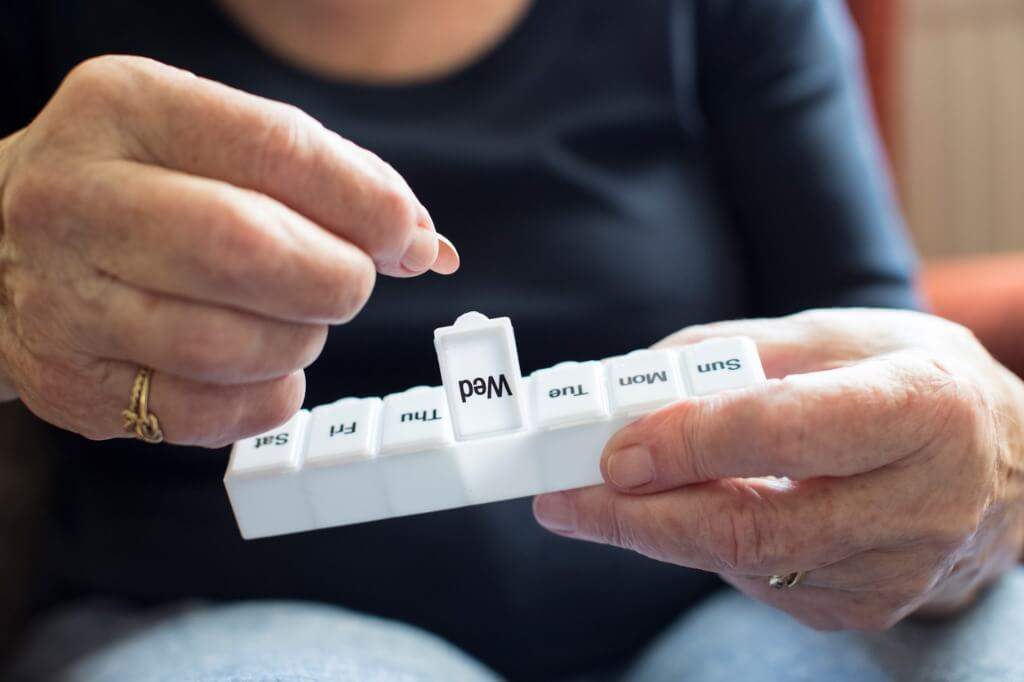
Medication compliance is a key factor in well-being. If you’re thinking that a medication “should be skipped”, “isn’t important” or “they have too many medications,” then be an advocate and talk to the prescribing physician(s) about it, but never modify a prescription on your own accord. The importance or significance of a medication and its dose or frequency should always be discussed with the prescribing physician(s). Write down your concerns ahead of your discussion so that you can be thorough in talking about side effects, any new symptoms, or whatever the reason is for wanting to make a change. Even if an individual does end up going off of a medication, there are often specific ways of doing this to prevent side effects (i.e., weaning).
We have a robust Medication Management Checklist made just for you that you can view or download here, as well as an in depth video on how to maintain Medications here.
If your loved one needs a little extra prompting with meds and lives on their own, look into something like the Livi. The Livi is a smart home medication dispenser that simplifies managing multiple medications for patients while giving caregivers support.
Visitour YouTube channel for talks around aging topics and to watch our Coffee Chats with Tiffany where RN Tiffany Rubin talks about matters you care about.
BPC SERIES: A 9-Part Series on BEING a PRIMARY CAREGIVER (BPC)
Approximately 43.5 million caregivers have provided unpaid care to an adult or child in the last 12 months. *
This series is dedicated to the heart and soul of this informal, unpaid, caregiving group, the primary caregivers. Silver Lining is dedicated to a healthier Delaware by using our expertise to empower a group of incredible people to give their loved ones the best care possible.
What is a Primary Caregiver? A primary caregiver is the title given to anyone that is primarily (first-up) responsible for caring and providing for another living thing. A primary caregiver could be:the sole available person caring for anotherthe person who cares for another in the primary role (and has additional support people)the individual who lives with the person that needs cared forUltimately, a primary caregiver is responsible for making sure that the person they’re caring for gets the support and care they need. Our goal with the BPC Series is to support this amazing group of primary caregivers with resources, shout outs and access. We see you and we are here for you.
* National Alliance for Caregiving and AARP. (2015). Caregiving in the U.S
By Brittany Stoltzfus, RD, LDN, owner of Simply Nutrition LLC in Pennsylvania
Being a caregiver of a loved one involves multiple responsibilities. This role can be stressful at times, especially when meal and snack times arrive. As people age, different medications, disease states and emotional health can influence one’s ability to eat. How can you as the caregiver know if your loved one is eating enough? Every person is unique in their exact nutrient needs so overall goals can vary person to person. A person can show physical signs of not eating enough through increased weakness, increased fatigue, and a high level of weight loss. While working with your loved one, patience is helpful. Remember, your loved one will have good days and challenging days with food intake and that is okay. Read the tips below to aid with increasing your loved one’s food intake.
NO RESTRICTIONS
When your loved one has a decreased appetite, allow them to choose what foods sound good to them. If they are interested in seconds, offer another portion. If your loved one is on a restricted diet, speak with your physician first before loosening restrictions.
AMBIANCE
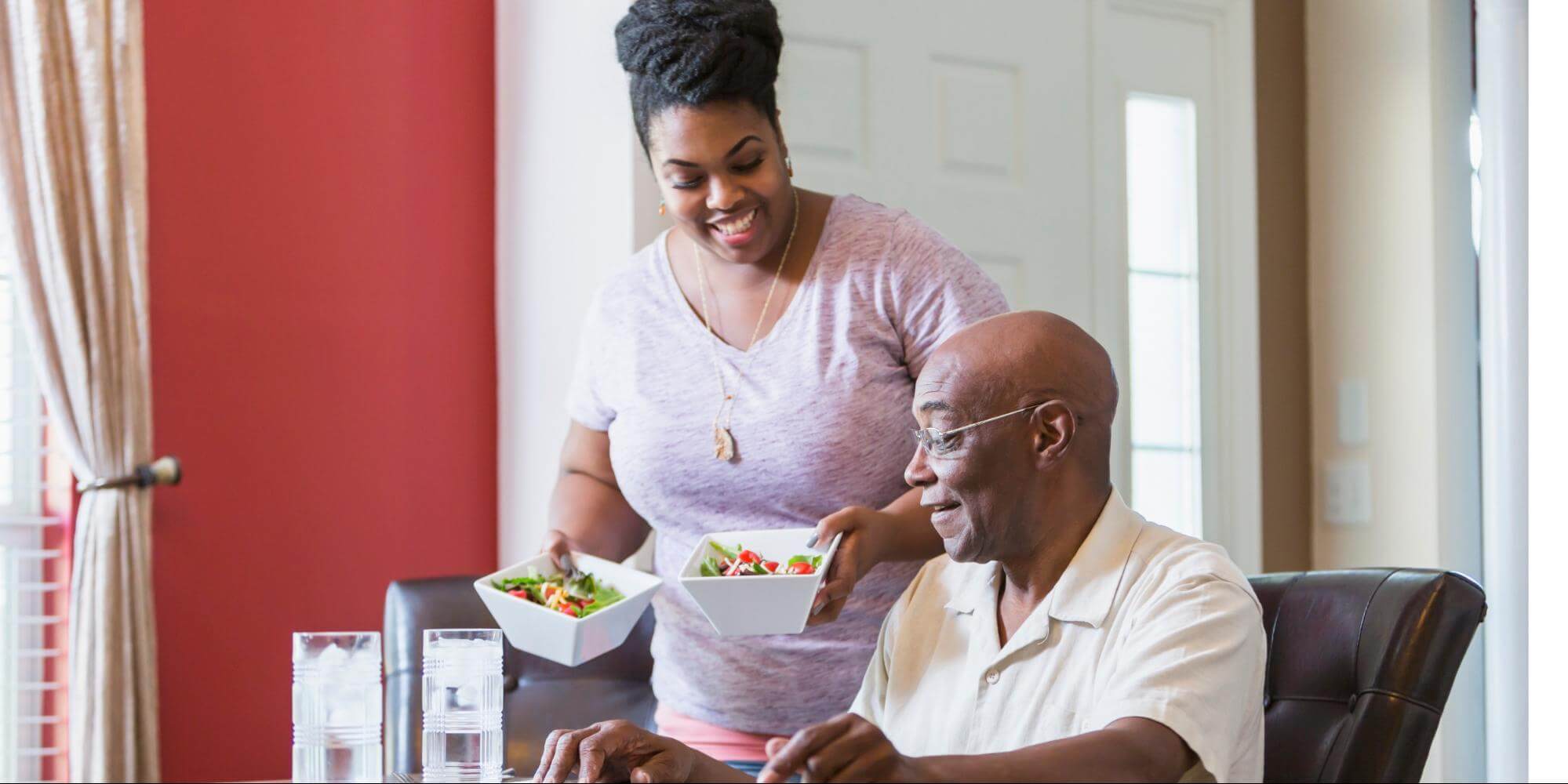
Creating an enjoyable eating experience for your loved one is key. This can include eating together at the table, playing soothing music, and presenting the food in an appealing manner.
MEAL SCHEDULE
Offer 4-6 small portions throughout the day versus 3 meals. This approach provides manageable portions and variability based on individual’s needs.
FOOD CHOICE
On days your loved one is not as hungry, offer high calorie options such as nut butters mixed in yogurt or oatmeal, avocado toast or smoothies to boost calories.
SIMPLE FLAVORS
Prepare foods with few spices or flavors. Choosing bland food such as bread, applesauce, rice, or bananas can be helpful or protein with limited seasoning.
If you notice your loved one is struggling to eat most days (4 out of 7 days), working with a registered dietitian or the team at Silver Lining Home Healthcare can be helpful for a personalized plan for your loved one.
Simply Nutrition LLC is a registered dietician-owned nutrition and wellness company focused on bettering every client’s relationship with food. They focus primarily on remote interactions (through Telehealth) to enable access to anyone. If you’re interested in learning more, visit their website.
BPC SERIES: A 9-Part Series on BEING a PRIMARY CAREGIVER (BPC)
Approximately 43.5 million caregivers have provided unpaid care to an adult or child in the last 12 months. *
This series is dedicated to the heart and soul of this informal, unpaid, caregiving group, the primary caregivers. Silver Lining is dedicated to a healthier Delaware by using our expertise to empower a group of incredible people to give their loved ones the best care possible.
What is a Primary Caregiver?
A primary caregiver is the title given to anyone that is primarily (first-up) responsible for caring and providing for another living thing. A primary caregiver could be:the sole available person caring for anotherthe person who cares for another in the primary role (and has additional support people)the individual who lives with the person that needs cared forUltimately, a primary caregiver is responsible for making sure that the person they’re caring for gets the support and care they need. Our goal with the BPC Series is to support this amazing group of primary caregivers with resources, shout outs and access. We see you and we are here for you.
* National Alliance for Caregiving and AARP. (2015). Caregiving in the U.S
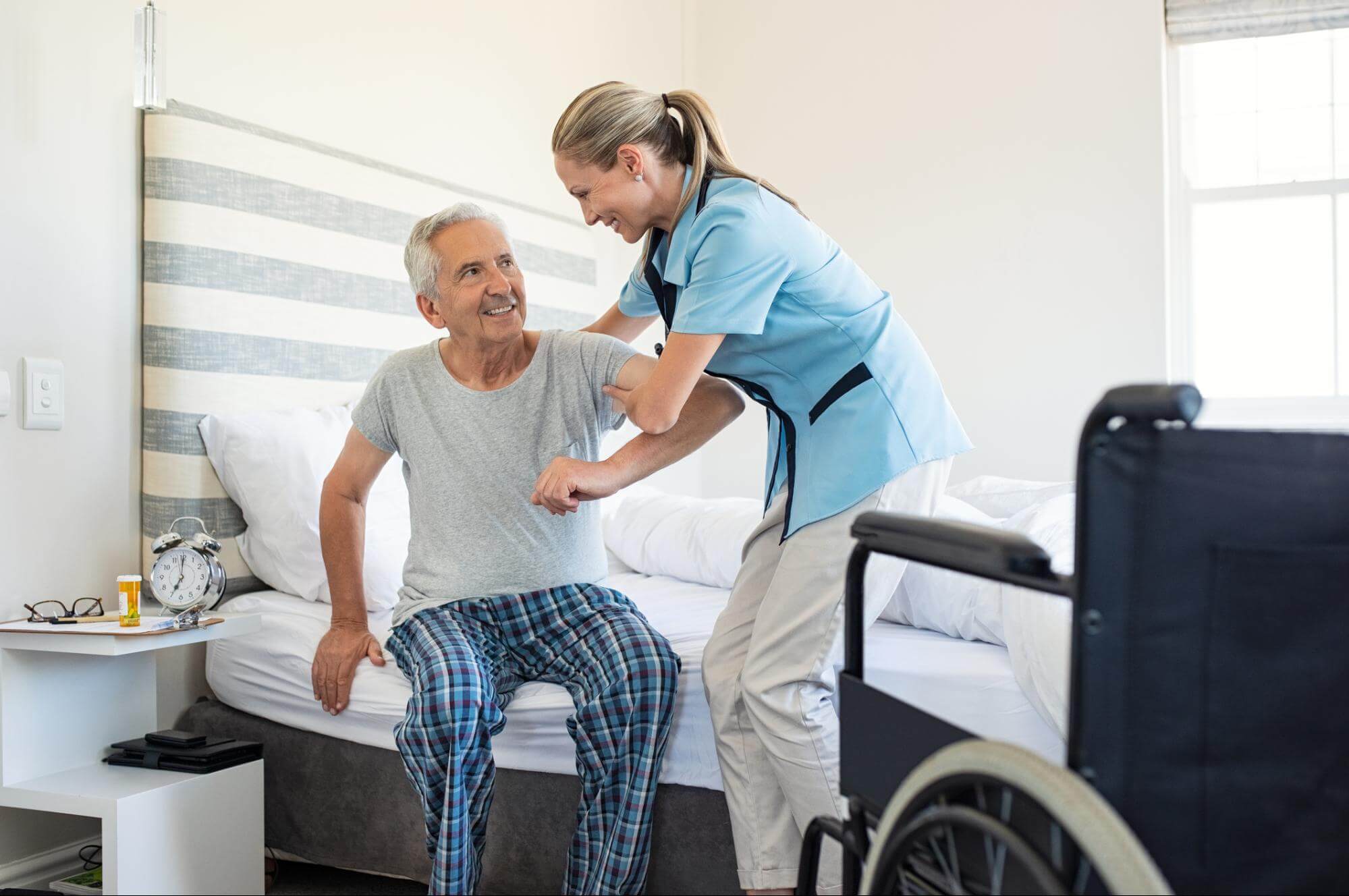
Getting safely in and out of bed, or doing transfers of any kind, can be physically taxing. Our resident nurses, Tiffany and Amy, offer these steps in learning the ropes:
STEP 1: DETERMINE WHAT KIND OF ASSISTANCE YOUR LOVED ONE CAN PROVIDE YOU. TYPICALLY, IT’S ONE OF THE FOLLOWING:
Independent – no assistance is needed
Partial assist – light assistance is needed (i.e., to get the feet to the edge of the bed, to get them sitting up)
Dependent – your loved one can’t get out of bed without someone helping the entire time
STEP 2: DETERMINE WHAT KIND OF WEIGHT-BEARING CAPABILITY YOUR LOVED ONE HAS.
Full weight-bearing – able to fully stand on their own feet/own accord
Partial weight-bearing – able to stand but not able to put all their weight down (common in hip and knee surgeries)
No weight-bearing – unable to stand or bear weight on their own
STEP 3: DECIDE ON YOUR METHOD:
For someone who is dependent or non-weight-bearing, you MUST use an assistive device to safely get them out of bed. A hoyer lift is the type of equipment you will need. They come in manual or electric options as well as floor or ceiling options. If the hoyer device will be temporary, renting a it may be most beneficial. Go through your insurance company first. If the hoyer lift will be permanent, then adapting the floor layout, home modifications and adjusting the type of lift is necessary.
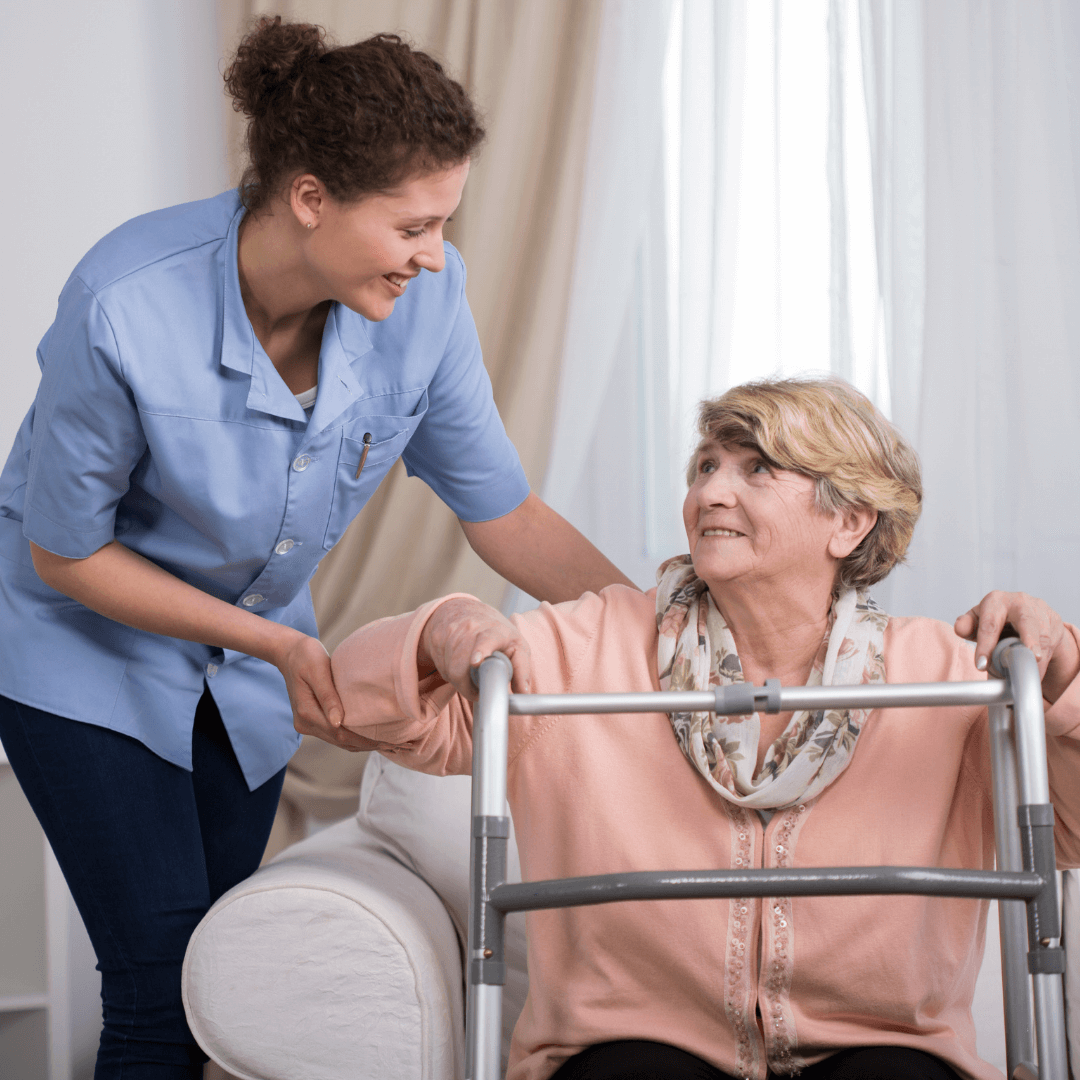
For someone who is a partial assist, there are a variety of options. If you can safely get them to the edge of the bed on your own, there are sit-to-stand lifts, transfer boards and walkers that can safely allow them to pivot to a chair. A transport chair or light wheelchair is a preferred type of seating to transfer to in these cases.
If you can’t safely get your loved one to the edge of the bed on your own, then look at adjustable bedframes/hospital bed options (for two-person beds, there are adjustable beds that offer different settings for both sides) so you can elevate the head of the bed prior to turning your loved ones legs to hang over the side of the bed. This eliminates you lifting them up and straining your back.
STEP 4: LEARN PROPER BODY MECHANICS!
You can’t care for your loved one if you are hurt. Always bend your knees/hips and keep your back straight. Lift with your legs (not your back), and keep your loved one as close to your body as possible (pretend you’re dancing!). NEVER twist. Here are some additional resources that offer direction on proper body mechanics:
If you anticipate your loved one will have issues getting out of bed, ask your physician for a Physical Therapy home health referral. A trained professional can assess your situation, provide recommendations, and discuss appropriate exercises. This should be covered by most major medical insurance policies.
Visitour YouTube channel for talks around aging topics and to watch our Coffee Chats with Tiffany where RN Tiffany Rubin talks about matters you care about.
BPC SERIES: A 9-Part Series on BEING a PRIMARY CAREGIVER (BPC)
Approximately 43.5 million caregivers have provided unpaid care to an adult or child in the last 12 months. *
This series is dedicated to the heart and soul of this informal, unpaid, caregiving group, the primary caregivers. Silver Lining is dedicated to a healthier Delaware by using our expertise to empower a group of incredible people to give their loved ones the best care possible.
What is a Primary Caregiver? A primary caregiver is the title given to anyone that is primarily (first-up) responsible for caring and providing for another living thing. A primary caregiver could be:the sole available person caring for anotherthe person who cares for another in the primary role (and has additional support people)the individual who lives with the person that needs cared forUltimately, a primary caregiver is responsible for making sure that the person they’re caring for gets the support and care they need. Our goal with the BPC Series is to support this amazing group of primary caregivers with resources, shout outs and access. We see you and we are here for you.
* National Alliance for Caregiving and AARP. (2015). Caregiving in the U.S
Getting the right durable medical equipment or DME (which is the official umbrella term for any medical equipment like walkers, wheelchairs, canes, etc.) can be cumbersome and difficult. Why? Because in order for an insurance company to approve DME, they need information from your physician (and sometimes this includes backdated notes/information). If your insurance company approves the DME, then the DME company needs to get you what you need and submit a reimbursement claim to the insurance company. Medicare, through which a lot of individuals over 65 get their DME, hasa list of approved DME. They’ll cover 80% of the allowable cost. You cover 20% plus your Part B deductible.
You can typically get equipment in two main ways:
Pay for it out of pocket. This makes it easier to pick what you want and you typically can get it faster because the insurance company doesn’t have to be involved..
Use your insurance. This usually means it’s free or you have a low co-pay. It may take more time to get it, but not having to pay for it is a plus, especially if it’s something expensive like a hoyer lift.
RESOURCES
Tomorrow Health is an excellent resource in helping you find the right medical equipment and in navigating your way through the insurance process. They’ll work with your doctor and your insurance to get you the right products at the right prices.
DME Supply USAis an online DME store through which you can view, sort, and purchase DME.
Visitour YouTube channel for talks around aging topics and to watch our Coffee Chats with Tiffany where RN Tiffany Rubin talks about matters you care about.
While safety precautions have always been part of the way we deliver care, we want to make sure our clients know exactly how we’ve augmented our precautions during COVID-19. We’re taking extra steps to make sure we’re keeping our clients, their loved ones, and our vulnerable population safe. Here are some of the key steps we’ve implemented, plus the “Why” behind them. We’re also providing cautionary steps you can take and resources you can use for getting tested for COVID-19, symptomatic or not symptomatic!
WHAT
WHY
We are fully stocked on Personal Protective Equipment (PPE) including masks, gowns, gloves and goggles. We’re ensuring distribution is effective for all team members and clients.
It matters to protect our clients and our staff. Without appropriate PPE, care cannot be provided and spread cannot be prevented. We’re very fortunate to have never run out of PPE. We continue to work closely with the Office of Health Care Quality to ensure adequate supply is maintained at all times.
Whenever we are providing care in a client’s home, we always wear a mask (in addition to standard precautions).
This is whether someone is symptomatic or not; masks are always worn. That way there is no accidental exposure.
For COVID-19 presumptive or positive cases, we’re using full-droplet precautions–goggles, masks, gown and gloves.
Full-droplet precautions prevent transmission to anyone else and ensure safe and great care at your home.
We have extensive protocols in place for testing, tracking and screening. All clients get a COVID-19 screener completed with every visit, and all team members complete a COVID-19 screener daily.
We have a robust tracking system to ensure follow-up of all potential exposure cases that are reported to us. The most common situation we’re currently running into is when a family member of a client develops symptoms, not our staff or our client. In these situations, we treat it as a positive case and will do full PPE until COVID-19 is ruled out. This is to protect our client, staff and community against transmission.
We’ve developed a consistency score to minimize the number of staff coming into a client’s home.
Our internal consistency score takes into account things like how many hours a client has in a week, the client to caregiver ratio, and level of need of the client. By having a baseline score, we can minimize the number of staff coming into a client’s home, protecting our clients and their families to an even higher degree
We have a Registered Nurse in-house to manage and monitor all clients.
As a Home Health company in the state of Delaware, we are required to have a Registered Nurse on staff. Our RN/Clinical Director ensures we respond quickly and intelligently to any situations or exposures. Home Care companies do not have an RN overseeing care.
We have extensive COVID-19 protocols and testing requirements in place for all scenarios, including possible exposures and COVID-19 positive cases. No team member with COVID-19 symptoms can work until they are medically cleared (even if they do not have COVID-19).
Why? Because there are no shortcuts to safe, reliable care. Our primary purpose is to deliver care to you with safety that’s consistent on every visit, with every interaction. You can be 100% confident that we know how to be prepared, what to look for, how to track, and how to follow-up.
WHAT CAN YOU DO TO HELP?
To protect your vulnerable loved ones:
If you live with them, do the minimum CDC recommendations at ALL TIMES, no exceptions.
If you’re sick, get tested immediately and maintain distancing when possible. It’s inconvenient but it could save a life.
ALWAYS alert Silver Lining if you’re getting tested for COVID-19 or if you’ve developed symptoms. This will ensure we can protect our team members and prevent transmission to others. We’ll do full-droplet precautions (use of PPE with goggles, mask, gown, and gloves) until COVID-19 is ruled out.
If you’re visiting a vulnerable loved one:
Never go if you’re sick.
Always wear a mask the whole time (so as to not infect commonly touched spaces).
Wash hands prior to entering, before and after eating, after toileting and after exiting
HOW TO GET TESTED:
Testing is FREE by federal mandate. You will not have a copay to use your insurance. For the mail-order option, you can choose to either go through your insurance or pay out of pocket. Different testing options have different results time. The primary reason to get tested if you’re not symptomatic is because you’ll be in an area where maintaining social distancing is not possible.
Know Your COVID-19 Status – Order a mail order kit – Want to go on vacation? See family? Get tested before and/or after!
Most clients don’t want to call a home care agency for assistance. After all, we don’t want to need help as we age. And most of us don’t want to pay for it. More often than not, a match between a client and a home care agency starts with a referral from a professional source (like your doctor), a family member (usually a son or daughter), or a close friend or neighbor. People who are close to the client usually take the first step in researching care options.
So when do you know if someone close to you would benefit–and even enjoy–having home care? You educate yourself on key indicators of help. Our Level of Need Calculator looks at some key factors that contribute to someone needing assistance. Being aware of recurring scenarios is also important. Some scenarios that indicate it’s time to acknowledge the need for help are:
Frequent falls
Frequent doctor appoints
Increase in urinary tract infections
Forgetfulness
Trips to the emergency room
Increase in medications
When these indicators are not acknowledged, health outcomes are usually poor. Ignoring them increases the likelihood of a lifestyle change being forced rather than chosen (i.e., a broken hip from a fall means moving to a a rehab hospital). If you or your loved one wants to stay home and age in place, it is critical to be alert to these scenarios. Keep in mind that home care doesn’t have to be permanent, invasive, or even from a professional company.
What do I do if I need help or someone I know needs help?
Call, or email. Even if we’re not the right fit, we’re happy to answer questions and get you connected with the right resources. We can go as fast or slow as you or your loved one needs to go.
Plan. Call an elder law attorney. We have three that we highly recommend. Take a peek here. They can help you protect what you have and plan for the quality of life you want to have. The sooner the better. We recommend this step for any client. For some clients, an elder law attorney will meet with you and you won’t need any services. For others, an elder law attorney can be the difference between staying at home as long as you want to or being forced to leave your primary home and move to a facility.
Take a look at our Resource Center for more information like Payment Options, Veterans Benefits, and Who we Are at Silver Lining.
What is it? Why would I need it? Why would I want it? Who pays for it? What is the difference between this and going to a facility?
Here’s the deal. The healthcare system is complex. Every individual is different, which makes generalizations something we just don’t like. Here are some answers to common questions.
WHAT IS IT?
Home care is a broad term that means any medical or non-medical care provided in a primary place of residence. That means you may see home care in a single-family home, at an in-law suite, in an assisted living or at a skilled nursing facility. Home care is generally divided into two main areas: home health and home care. Home health includes medical care like medication management and organization, PEG tube care, trach care, wound care, etc. Home care includes both Activities of Daily Living (ADL) and Instrumental Activities of Daily Living (IADL) like dressing, bathing, check-ins, reminders, errands, transportation, cleaning, and cooking. For a peek into the difference between ADL’s (bathing/dressing etc) and IADL’s (cooking/cleaning), take a look at this post.
WHY DO OUR CLIENTS NEED IT?
Two main overarching reasons: acute care (short-term) and chronic care (long-term). The biggest reasons for short-term home care include a hospitalization, wound care, or surgery. The biggest reason for long-term home care include a change to the primary caregiver (i.e. the passing of a spouse), chronic disease management (like diabetes or dementia) or a decline in ability to do things (like cook, clean or drive).
WHY WOULD OUR CLIENTS WANT IT?
Home care exists to make our clients’ life easier and provide him with a better quality of life, keeping him independent at home as long as possible. That doesn’t mean it’s any easier to get older, or for him to feel like he needs help. Home care does allow our client to stay home longer. It lets him continue to do things he wants to do (like go shopping, eat the meals you want to eat) and have control over his environment. It may keep him safer longer. We know we’re caring for our clients in the most private of spaces: their primary residence.
We need and want to keep you up to date on all the information we have regarding the Coronavirus, or COVID-19. On March 12th, we had a meeting with the State of Delaware, and we are staying apprised of all updates through the Delaware Home Care and Hospice Association, the trade associations, the Delaware Office of Health Care Quality, and the Delaware Office of Health and Human Services.
The Coronavirus (or COVID-19) can have far-reaching impacts, health included. We know that uncertainty causes stress, and that you may have concerns about the virus. Our goal with this blog post is to ensure you are up to date on all the steps we’re taking to keep our team and community safe.
We’re going to cover 5 things:
Preparation in the case of the need for self-monitoring or an active virus situation
What to do if you have symptoms
What Silver Lining Home Healthcare is doing for our staff and team, how we’re limiting exposure to you
How to ask questions
Planning for the what is next
PREPARATION IN CASE OF THE NEED FOR SELF-MONITORING OR IF YOU GET THE VIRUS
We recommend preparing just like you already do for an emergency: Purchase and store two weeks worth of medications, food, water and basic supplies. We have included a list of items to make an EMERGENCY PREPAREDNESS KIT for your convenience. Ideally, you won’t need to use all your supplies but it is better to have it and not need it, than need it and not have it.
We are working on having a solution for those individuals that can’t/don’t want to go out to get the basics (like toiletries, paper towels and food) and will communicate that out to you in the coming weeks, should the need for it arise.
WHAT TO DO IF YOU HAVE SYMPTOMS:
Symptoms are very similar to the seasonal flu and include:
Fever
Cough
Shortness of breath
If you have mild symptoms:
Call your Primary Care Doctor and make them aware; they’ll direct next steps. Be aware that in Delaware, your doctor is NOT allowed to have you come into the office if you have symptoms of COVID-19 and will ask you to remain in your car so as to not contaminate or expose others.
Limit your exposure to others. Do not go anywhere with large crowds and in fact, don’t go out of the home unless you absolutely need to.
Wash your hands frequently.
Use treatment as prescribed. Do not panic
Tell Silver Lining. We need to ensure our staff are ready!
If you have severe symptoms (difficulty breathing, no ability to catch your breath):
Call 911 or go to your nearest emergency room
OUR FOCUS ON WELL-BEING FOR OUR TEAM AND FOR YOU:
Here are a few ways that we’re limiting exposure.
We are educating our team with up-to-date and timely information multiple times per week and holding Q&A sessions so that constant communication and education is a reality.
We have set up weekly ongoing scheduled Q&A sessions via Google Hangouts that you can join (more information below).
We are preparing for a variety of contingencies. We want this virus to simply go away. Since a chance of that happening is minimal, we are being sure to proactively consider the best ways to continue delivering services.
The guidelines currently show that treatment for COVID-19 is still administered at home and is mostly symptom management, unless signs and symptoms worsen. And like with any sickness, avoiding large crowds (including hospitals, where more sick people are) is advisable. We can and will still care for you at home if you are diagnosed with COVID-19. We will only stop caring for clients if the State of Delaware mandates it or our staff are unable to physically be present to provide care due to unavailability. Why might unavailability become an issue when we have a stellar record of no missed visits?
Anyone that exhibits any symptoms has to be tested quickly in order to rule out COVID. In the instance that tests are unavailable to confirm COVID-19, precautions have to exist as if COVID-19 is there, to ensure minimal risk of exposure to others. If we don’t have that practice in place, then we could put you more at risk. We also acknowledge that staff availability may be limited by situations out of our control, such as school and daycare closures, which result in our staff being unable to go to work since they have to care for their family. Additionally, the personal protective equipment that staff need in order to care for our clients in the case of you having the virus is in limited supply, so should the COVID-19 spread in our community, we’ll have to ensure the protective equipment is used for the most urgent of cases.
Again, please know that we’re having this discussion early to set the expectation of what may happen; at this point, NONE of these hypothetical situations have occured. We’ll continue to plan for the worst and hope for the best.
In the instance that services need to be reduced to protect you, consider what hours can be reduced temporarily. We will keep you up to date if and when the time comes to have this discussion. Because we are constantly aware of the most current recommendations, you do not need to proactively cancel services. If you are an essential services client, we will be actively working on a plan to ensure services go uninterrupted. We’ll continue to send out information as it becomes available to us; you can head to our website and click the “View Information Regarding COVID-19” to for the most up to date information.
We are in uncharted waters; I can tell you that Allison, Amy, Dorrina, and I are working around the clock (literally) to handle and channel all the information that is coming in and deal with any specific situation that arises. You will ALWAYS get a response to a question, no matter how big or how small. We are here to Make Lives Better through it all.
Disclaimer: this blog post is focused on achieving wellness and is not meant to replace any suggestions from your physician or healthcare team.
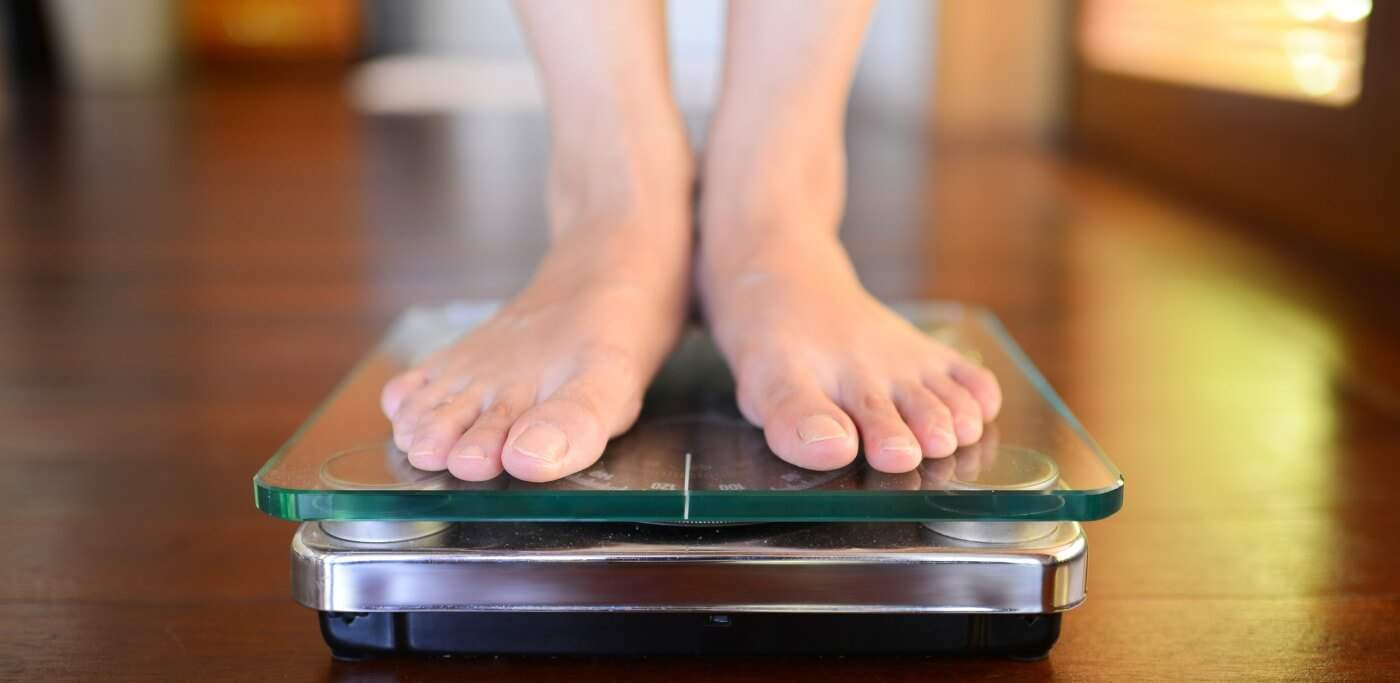
I struggled with weight during and after both of my pregnancies. It wasn’t until I worked with a registered dietician in Delaware and used a bio-impedance scale that I was able to focus on my overall wellness and take action steps based on my body’s data. After my first pregnancy, I had to go to the dietician’s office to do this. After my second pregnancy, I was able to get my own scale (they’re so affordable now!) and do everything from my own home.
The right scale gives you real data, empowers you to make the right changes for YOUR body, and gives you actionable information for you and your healthcare team to focus on. Does this sound like your experience with a scale? Probably not. Here’s the issue with normal scales: They give you one single number–a weight. You don’t know if it’s good or bad. You don’t know what your body composition looks like, what part of it is muscle mass or what part is water weight. What does this mean? It could mean that changes you make may not target the true route you need to take to be healthy! This is why I recommend a scale that has a bio-impedance ability to provide you with more data. It’s non-invasive and sends a small current through your body (no, you don’t feel anything) to get measurements.
WHAT IS BIOIMPEDANCE?
Bioelectrical impedance assessment is a way to measure body fat, muscle mass and a variety of other aspects of body composition.
WHY USE THIS KIND OF SCALE?
It gives you real data like muscle mass, visceral fat, BMI, and water percentage, This means it’s specific information directly related to YOUR body
It gives you actionable information to take to your doctor or Registered Dietician.
It gives you empowerment on how to change your lifestyle.
It’s convenient! You can send your information via text or email. Create an accountability group with your sister, share with your doctor or just keep it for you
A FEW QUICK TIPS:
ALWAYS use the scale barefoot, or it won’t be able to do anything but take a general weight (i.e., no additional data).
You WILL need a smart phone if you want to share your information directly via text or email.
It is NOT difficult. I had mine out of the box and a profile set up in under 5 minutes.
You CAN use the same scale for multiple people.
WHAT DO I DO IF I GET A SCALE?
Don’t assume you know what to do with the information. The internet is a beautiful and scary thing, depending how you use it. While degrees don’t make people smart, they DO provide a level of expertise you’re not going to get by searching by yourself on the internet. Request a referral from your doctor for a registered dietician or if you’re in Delaware, contact my gal, Wendy Gibson at Contemporary Nutrition. Don’t be afraid to interview your dietician to be sure they understand what you’re looking for. For instance, it’s important to me that I get real feedback from my dietician on how to adjust my lifestyle for health AND sustainability. I need realistic goals, because I’m going to eat pizza. And who wants to go a lifetime without eating pizza?!
I wish you the best as you find a new “weigh” to wellness!
“Be somebody who makes everybody feel like somebody.”
I keep this framed title and quote on my desk. It’s the first thing I see when I start to work (besides my Anne of Green Gables mouse pad). It’s integral to my personal values, and it’s integral to Silver Lining. When you care about people, you care about all people. At Silver Lining Home Healthcare, the care we deliver to our clients begins and ends every day with how we care for our own. Internally, we make it a priority to create and maintain a supportive culture in which our caregivers can thrive. When they’re at their best, our service to our clients can be at its best.
You have a lot of options. Why work at Silver Lining Home Healthcare? I’ll give you 5 reasons.
Little Things Make a Big Difference You CAN do the little things that make a big difference because we give you the resources to make it happen. From giving stipends so you can pick up a cupcake for your favorite client (who is not diabetic, of course) to empowering you to make a favorite meal and giving you the tools to do it, we want you to help our clients Live Life to the Fullest while we do the same.
1 on 1 Care It’s 1 on 1 care. Not 10 on 1. Not 5 on 1. 1 on 1. A couple might make it 2 to 1. Our caregivers can focus on their clients and provide highly customized care for them to meet their personal preferences.
Autonomy It’s not for everyone. In fact, if you require complete structure, this may not be the best environment for you. If you always find ways to improve your work environment, enjoy the ability to affect change, and are proactive, this is a place where you will thrive. Take a look at the 10 Things that require zero talent(a list we talk about regularly and hold our team accountable to).
License Oversight In order to renew a CNA license, your ‘worked’ hours have to be supervised by an RN. As a skilled home health agency, we have the certification to supervise, so the hours you work support your license renewal. This isn’t the case if you work at a Program Approved Service Agency (PASA), because you are not overseen by an RN. With a career at Silver Lining Home Healthcare, you only need one job to support your professional CNA license.
Benefits We focus on ways you can make a career with us, so we offer a benefits package to help you create one.
Pay based on experience
IRA Matching
Full-time and Part-time roles
Travel Stipends
Paid Time Off
Sick Time
2 Holiday per year Commitment (not every other holiday, but a total of 2 holidays per year)
Paid Parental Leave (maternity, paternity or primary and secondary, depending on how you structure your life)
6 Opportunities for Performance-based bonuses throughout the year
Retention Bonuses
Uniform Provision
Regular Employee Surveys
JOIN OUR TEAM
The care we give to our team ultimately touches the clients for whom we care, that’s why we’re passionate about supporting and nurturing our family of caregivers. Are you or someone you know a kind, caring individual who wants to make a difference in the life of a senior? Let’s connect! Go online today to start your journey with us.