
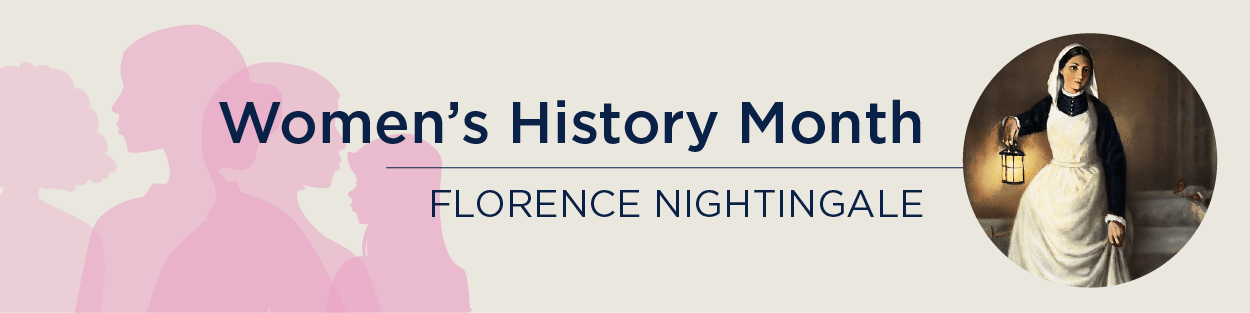
March is Women’s History Month, a time to recognize the contributions of women worldwide to history and progress. In the field of healthcare, there is perhaps no woman more famous for her influence than Florence Nightingale, often known as “The Lady with the Lamp.” Florence Nightingale organized and advanced care and nursing science, bringing the knowledge she learned as a nurse during the Crimean War back to London.
Working as a nurse in Turkey in 1854, Nightingale was confronted with medicine shortages, mass infections, and an absence of good hygiene practices. For every one soldier killed in combat, ten would die from illnesses and infections, many of them preventable.
Nightingale implemented improvements in hygiene practices (such as handwashing!) in the hospitals where she worked, with some claiming she turned a death rate of 42% to only 2%. She also petitioned publications in Britain to pressure the government for better conditions, to which the government responded with shipments of food, medicine, and an entire prefabricated hospital designed to be assembled upon delivery. Her presence caring for the wounded in this hospital even into the night earned her the nickname, “The Lady with the Lamp.”
After the war, with the attention she’d gained from her success in improving healthcare conditions abroad, Nightingale was able to establish the Nightingale Fund and set up the first nursing school, called the Nightingale Training School, which is training nurses to this day. She released books on nursing written in plain English, introducing the public to methods of care and hygiene and making nursing much more accessible; because of these accomplishments, Nightingale is considered the founder of modern nursing.
This Women’s History Month, let’s remember Florence Nightingale, the nurses who served with her, and every woman in healthcare, including many of our own Caregivers, that have worked to save and improve the lives of those in need.
