
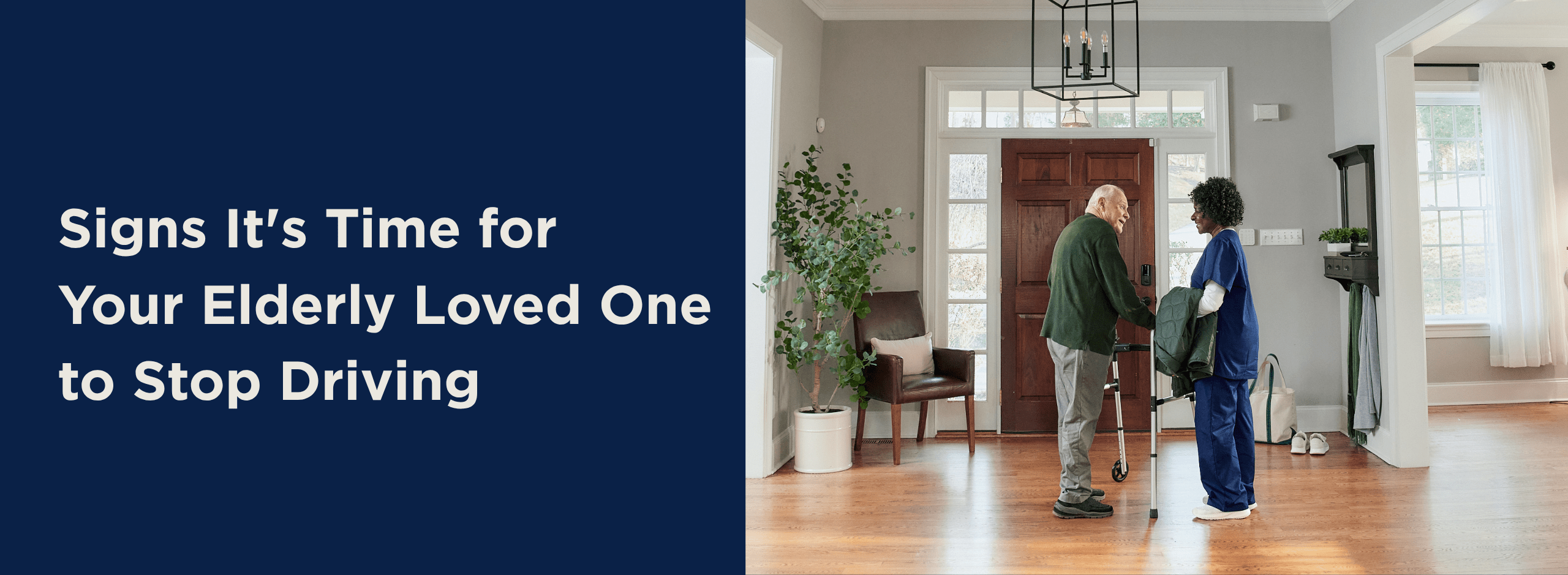
Few conversations in family caregiving are harder than this one.
Bringing up driving with an aging parent or loved one isn’t just about road safety – it touches something much deeper. For many seniors, a driver’s license represents independence, identity, and the ability to live life on their own terms. Taking that away, even with the best intentions, can feel like a loss they weren’t ready for.
And yet, at a certain point, safety must come first for your loved one, and for everyone else on the road.
If you’ve noticed changes in how your family member drives and aren’t sure what to do next, this guide is for you. We’ll walk through the warning signs to watch for, how to have the conversation with care, and how to help your loved one stay connected and independent long after the keys are put away.
Why the Driving Conversation is So Difficult for Seniors
For many older adults, driving isn’t just transportation; it’s freedom. The ability to get to a doctor’s appointment, run to the grocery store, or visit a friend without asking anyone for help is deeply tied to a sense of dignity and self-sufficiency.
Giving up the keys can feel like a first, unwelcome step toward dependence. It’s often accompanied by grief, frustration, and fear. Fear of becoming isolated, of burdening family members, of losing the life they’ve built around their independence.
That’s why this conversation requires more than logic. It requires empathy, patience, and a genuine understanding of what’s at stake emotionally, not just practically.
What Are the Warning Signs an Older Adult Should Stop Driving?
There is no single age at which driving becomes unsafe. According to the CDC, most people naturally adjust their driving habits as they age — driving less at night, avoiding highways, or limiting trips to familiar areas. But when these adjustments no longer compensate for the underlying changes, the signs tend to show up in specific, recognizable ways.
Frequent “Close Calls” and Unexplained Damage
New dents, scrapes on the car, or damage to the garage door that your loved one can’t fully explain are often early indicators of erratic driving. Frequent near misses like situations they describe as “that car came out of nowhere” may reflect slower reaction times or reduced awareness of the surrounding environment.
Physical and Cognitive Decline
Physical changes like arthritis, joint stiffness, or reduced range of motion can make it harder to turn the wheel, check blind spots, or respond quickly in an emergency. Vision changes are particularly significant. A University of Michigan study found that 14% of Americans 65 and older have vision impairment, and more than 25% of them stop driving within a year. Even subtle changes such as increased sensitivity to glare, difficulty reading road signs, or trouble judging distances at night can meaningfully affect road safety.
Cognitively, slowed processing speed makes it harder to react to fast-changing traffic conditions, follow multi-step directions, or make split-second decisions at intersections.
Getting Lost in Familiar Areas
One of the more striking warning signs is disorientation on routes your loved one has driven hundreds of times. Getting confused on the way home from the grocery store, missing a familiar turn, or needing to pull over to reorient are all worth taking seriously. Research has found that changes in driving habits like reducing mileage and sticking to repetitive routes can sometimes indicate early brain changes associated with dementia, even before memory symptoms are obvious.
Sudden Increase in Traffic Tickets or Warnings
New citations for running red lights, failure to yield, or speeding, especially in combination with other warning signs, suggest that the rules of the road are becoming harder to track and follow in real time.
Anxiety or Frustration Behind the Wheel
When a senior begins expressing fear, stress, or reluctance about driving by avoiding certain roads, refusing to drive at night, or seeming visibly tense after trips, it may reflect a subconscious awareness that something has changed. This kind of self-doubt is worth listening to.
How to Evaluate Your Aging Parent’s Driving Skills
Before having a bigger conversation, it helps to gather a clearer picture of where things actually stand.
Take a Ride-Along Test Drive
Offer to accompany your loved one on a typical errand — somewhere familiar, at a low-traffic time. Rather than watching for dramatic errors, pay attention to smaller patterns: do they brake abruptly or too late? Do they seem uncertain at intersections? Do they drift out of their lane or follow too closely? One ride won’t tell the whole story, but it can give you something specific and honest to build on.
Schedule a Professional Driving Assessment
A certified driver rehabilitation specialist (CDRS) can conduct a formal, objective driving evaluation. This removes the emotional charge from the conversation, and it’s no longer a family member’s opinion, but a professional assessment. Many hospitals and rehabilitation centers offer these evaluations, and the results can help guide next steps in a way that feels fair to everyone.
Consult Their Doctor or Eye Specialist
A primary care physician can assess whether medications, chronic conditions, or physical changes are affecting driving safety. An eye exam can catch vision changes that your loved one may not even be fully aware of. The NHTSA recommends families involve healthcare providers early, and for good reason because a doctor’s recommendation carries weight that a family member’s concern sometimes doesn’t.
How to Talk to an Elderly Loved One About Giving Up the Keys
How you approach this conversation matters just as much as what you say.
Approach the Topic with Empathy, Not Accusations
Begin from a place of love, not frustration. “I’ve noticed a few things that worry me, and I wanted to talk about them because I care about you” lands very differently than “You almost hit someone last week.” Acknowledge what driving means to them. Make clear that this conversation is coming from concern, not control.
Focus on Safety and Health Constraints
Framing the conversation around specific, observable changes rather than age alone keeps it grounded and easier to hear. “Your doctor mentioned that your medication can affect reaction time” or “the optometrist said your night vision has changed” makes the conversation about facts, not judgment.
Make It a Gradual Transition
Rather than an all-or-nothing ultimatum, consider a phased approach. Start by suggesting they avoid driving at night, in heavy traffic, or in unfamiliar areas. Revisit the conversation regularly. Gradual transitions are easier to accept and give your loved one time to adjust, emotionally and practically.
The Loneliness of Eating Alone
This one is often underestimated. Sharing a meal is one of the most natural sources of human connection and eating alone, day after day, can quietly erode both appetite and emotional wellbeing. Research consistently shows that older adults eat more, eat better, and enjoy meals more when they have company at the table.
Something as simple as a friendly, familiar presence at mealtime and someone to share conversation with while enjoying a meal together can meaningfully change a senior’s relationship with food.
A Care Advantage, Inc. Caregiver can help with all three of these hurdles, identifying foods and textures that are easier to eat, handling meal preparation so a nourishing option is always within reach, and simply being there at the table to share the meal. Sometimes the most powerful thing a Caregiver brings isn’t what they cook; it’s the company they provide.
What to Do When a Senior Refuses to Stop Driving
Sometimes, despite your best efforts, a loved one refuses to stop driving. This is one of the most difficult positions a family caregiver can be in.
A few options worth knowing about: their primary care physician can write a formal recommendation to stop driving, which carries significant weight. In some states, a doctor can report unsafe drivers directly to the DMV. If the situation becomes a genuine safety emergency, it is possible to report concerns to your state’s motor vehicle authority, though this is a difficult step that should be considered carefully.
Keeping the lines of communication open and continuing to offer alternatives is the most sustainable path forward. The goal is never to take something away. It’s to keep the people you love safe.
Keeping Seniors Independent: Alternative Transportation Options
Giving up driving doesn’t have to mean giving up independence. There are more options available today than ever before and helping your loved one discover them can reframe this transition as a new beginning.
Rideshare Services and Taxis
Apps like Uber and Lyft have made on-demand transportation more accessible than ever. Many communities also offer senior-specific rideshare programs at reduced rates. For seniors who aren’t comfortable with smartphones, GoGoGrandparent is a service that allows them to book rides using a regular phone call.
Public Transit and Senior Mobility Shuttles
Many cities and counties operate senior shuttle programs often free or low-cost for medical appointments, grocery trips, and community activities. Local Area Agencies on Aging are a great resource for finding what’s available in your community.
Enlisting Family, Friends, and Volunteer Drivers
Sometimes the most meaningful solution is also the simplest — a rotating schedule among family members, a trusted neighbor, or a volunteer driving program through a community organization.
Maintaining Freedom: How In-Home Care Solves Senior Transportation Hurdles
One of the most practical and often overlooked solutions to the transportation gap is in-home companion care. When your loved one has a reliable, friendly Caregiver by their side, the need to drive themselves diminishes significantly.
At Care Advantage, Inc., our Caregivers provide warm, dependable companionship that extends well beyond the home. That includes accompanying clients to social gatherings, events, and appointments, so your loved one never has to miss something that matters to them simply because they can no longer drive themselves. Our Caregivers also love to take clients on short walks or spend time outside for some fresh air, which can do wonders for mood, energy, and a sense of connection to the world beyond their front door.
If your loved one could use a friendly companion or a helping hand to stay independent at home, we’d love to talk. Our companion care services are designed to support the life your loved one wants to keep living just with a little more help along the way.
Learn more about our companion care services or contact us today to schedule a free assessment.
Sources: CDC Older Adult Drivers; National Highway Traffic Safety Administration (NHTSA); University of Michigan News — “Off the Road: 1 in 4 Seniors Quit Driving Due to Sight Issues”; US News Health / HealthDay — “Driving Habits Provide Window into Seniors’ Brain Health”; AgingCare; Senior Safety Advice.
